Epiphany Cross Dive In Tarpon Springs: What To Expect On January 6
Every January 6, the Archbishop blesses the waters of Spring Bayou, a white dove is released, and young men dive for a cross cast into the bayou. Here is how the day works and how to plan a trip around it.
Short answer
The Epiphany cross dive happens on January 6 in Tarpon Springs, after Orthros and Divine Liturgy at St. Nicholas Greek Orthodox Cathedral. The Archbishop blesses Spring Bayou, a dove is released, a cross is cast into the water and young men dive for it; the retriever is considered blessed for the year.
Tarpon Springs hosts one of the most distinctive religious ceremonies in the United States every January 6. After the morning services at St. Nicholas Greek Orthodox Cathedral, a procession moves to Spring Bayou, the Archbishop blesses the waters, a white dove is released into the air, and a cross is thrown into the cold bayou for a crowd of young men to dive after. The one who brings it up is considered blessed for the year. The community has held the cross dive for close to a century, and the city's own planning documents describe it as the largest annual Epiphany celebration in the western hemisphere. This guide walks through what actually happens on the day, where to stand, and how to fold a Sponge Docks boat tour into the same trip. If you want to stretch the day without spending much, our guide to free things to do around Tarpon Springs covers the Sponge Docks, Spring Bayou, and even a no-fee island state park.
What Is The Epiphany Cross Dive In Tarpon Springs?
The cross dive is the climax of the Orthodox Feast of Epiphany, held each January 6 at Spring Bayou, where young men of the parish compete to retrieve a cross cast into the water by the Archbishop after the waters are blessed and a dove is released. The retriever is considered blessed for the year. The ceremony follows Orthros and Divine Liturgy at St. Nicholas Greek Orthodox Cathedral and has been held for close to a century.
Epiphany, also called Theophany, commemorates the baptism of Christ in the Jordan River. In Greek Orthodox practice the feast centers on the blessing of water, and in coastal and riverine parishes that blessing takes the form of a cross thrown into the water and retrieved by swimmers. Tarpon Springs turned a local observance into an event that draws visitors from across the country, because the town has the density of Greek heritage to support it. The dive is not a performance staged for tourists; it is a parish observance that visitors are welcome to watch respectfully. To understand why this town can sustain such a tradition, read our guide to what Tarpon Springs is known for beyond the dive.
The order of events on the day is fixed by tradition. The services at the cathedral come first, then the procession of clergy, dignitaries and the divers to the bayou, then the blessing, the dove release and the cast of the cross. Afterward the celebration continues in the town, with food, music and the traditional glendi, a community celebration. The cathedral publishes full schedules closer to each feast day, and the schedule for 2027 has not been announced yet, so check the cathedral's Epiphany page near the date rather than relying on third-party listings.
For many visitors the dive is also a gateway into the rest of Tarpon Springs: the Sponge Docks, the Greek bakeries, and the boat tours that run the same waters the procession blesses. If you are building a whole weekend around it, the planning guide to things to do around Tarpon Springs covers the rest of the town.
What Happens On January 6 At Spring Bayou?
January 6 begins with Orthros and Divine Liturgy at St. Nicholas Cathedral at 36 N Pinellas Avenue, followed by a procession to Spring Bayou on the Craig Park shoreline. There the Archbishop blesses the waters, a white dove is released, the cross is cast into the bayou, and the young men dive. The retriever carries the cross back to the cathedral community and is honored for the year.
The morning belongs to the church. Divine Liturgy on a normal Sunday begins at 9 a.m. after 7:45 a.m. Matins, and feast-day timing follows the same pattern with a later procession; the exact hour for the dive itself is set in the published schedule each year, so treat any third-party time you see as provisional until the cathedral confirms it. Seating inside the cathedral is limited and fills with parishioners and dignitaries first. Most visitors watch from the bayou.
At the bayou, the banks of Spring Bayou along Craig Park fill well before the procession arrives. The divers, teenage boys and young men of the parish, typically enter the water from boats and rafts positioned in the middle of the bayou. When the cross hits the water, the dive lasts seconds: a churn of swimmers, then one of them surfaces holding it. The crowd's reaction is the loudest moment of the day. A second cross is sometimes cast for younger children at a separate moment, a detail that varies year to year with the announced program.
The ceremony timeline below lays out the shape of the day. Times other than the standing date of January 6 come from the normal published pattern, so confirm the current year's schedule with the cathedral before you set your alarm.
| Part of the day | What happens | Where | Timing notes |
|---|---|---|---|
| Morning services | Orthros followed by Divine Liturgy | St. Nicholas Cathedral, 36 N Pinellas Ave | Feast-day times are published each year; Sunday pattern is 7:45 a.m. and 9 a.m. |
| Procession | Clergy, dignitaries and divers walk to the water | From the cathedral to Spring Bayou | Follows the end of Liturgy |
| Blessing of the waters | The Archbishop blesses Spring Bayou | Bayou shoreline at Craig Park | The heart of the observance |
| Dove release | A white dove is released over the water | Over the bayou | Immediately before the dive |
| The cross dive | Young men dive for the cast cross | Spring Bayou | Over in seconds; the retriever is blessed for the year |
| Afternoon | Community celebration, food and music | Around town and the cathedral | Details vary by year |
Spectating has one governing rule: this is a religious service held outdoors, so dress and behave accordingly. Stand back from the water's edge barriers, keep the shoreline clear for the divers' families, and expect dense crowds on the roads between the cathedral and the park.
If you want the day to end on the water rather than in a parking queue, the two tours above are the natural fits: the evening dolphin cruise out of the Sponge Docks, and the sponge diving demonstration that explains the industry the ceremony grew out of past the same docks.
Where To Watch The Cross Dive And When To Arrive?
The best public viewing is along the Craig Park shoreline of Spring Bayou, a short walk from St. Nicholas Cathedral, and the banks fill early, so arrive well before the procession does. Bring a chair or blanket for the wait, expect road closures around the cathedral and the park, and plan on walking from a distant parking spot on January 6.
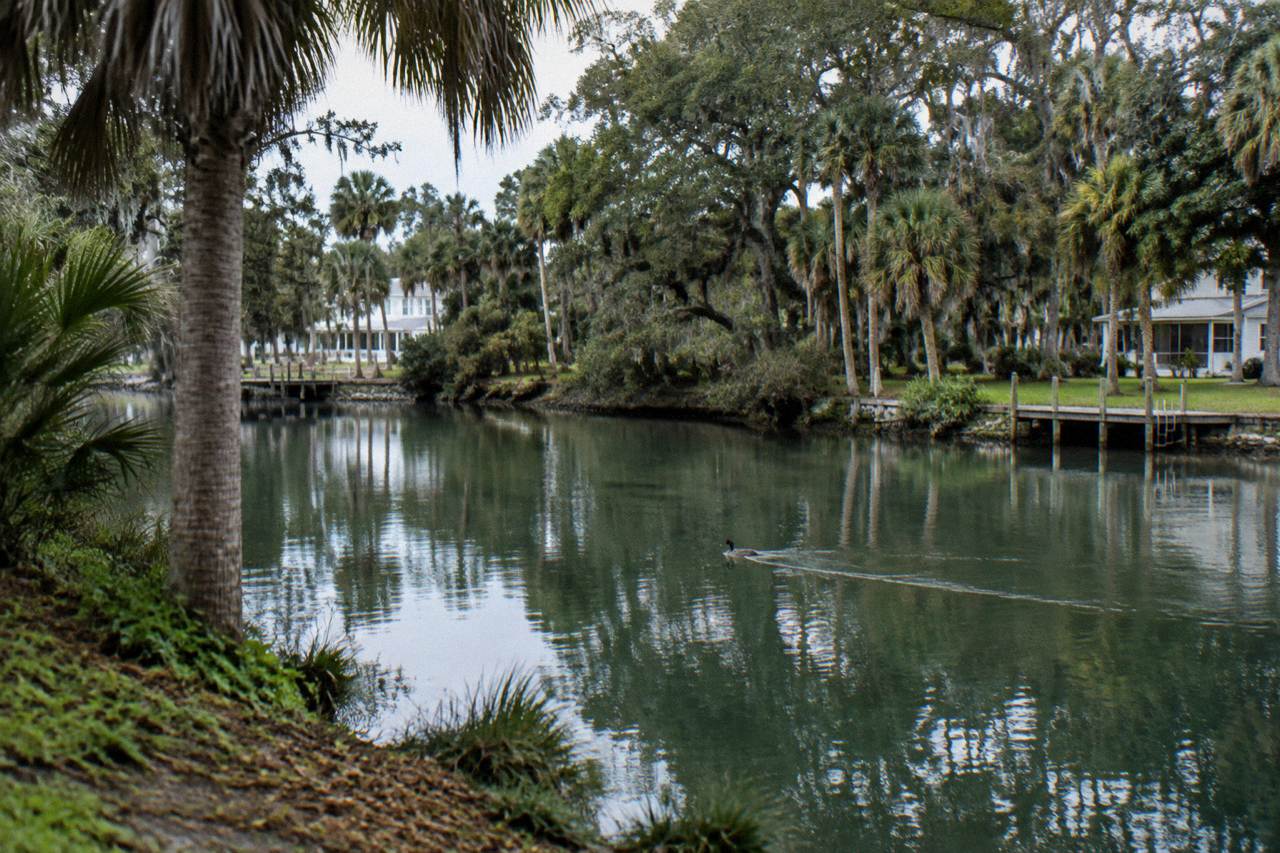
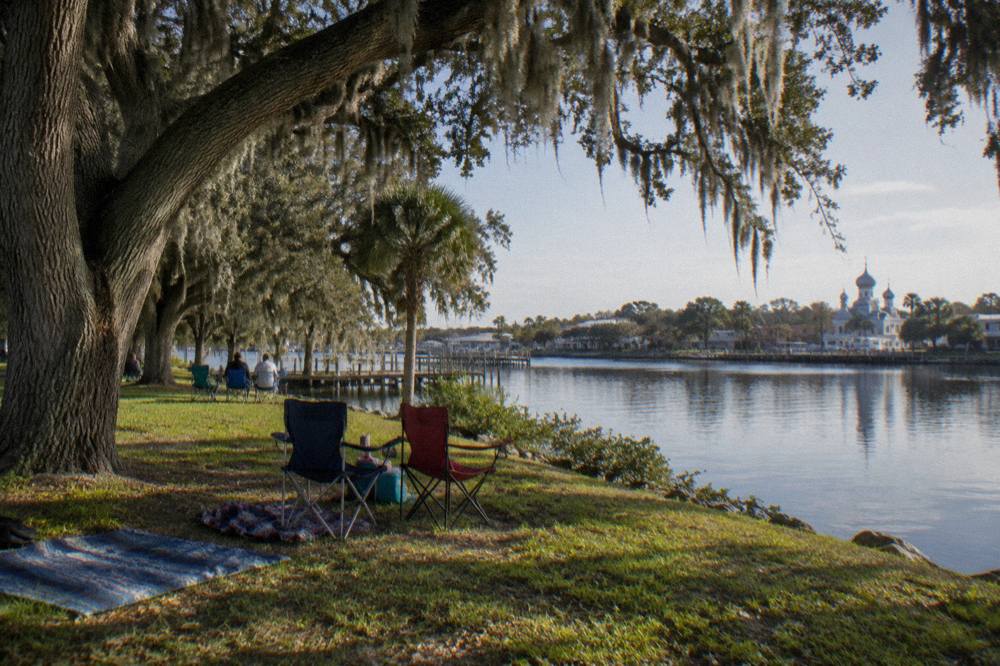
Craig Park wraps the southern and western edges of Spring Bayou, and the open grass above the water is where the crowd gathers. Elevated spots are scarce; the terrain is flat, so a good view depends more on arriving early than on finding a vantage point. The dive itself happens mid-bayou, so even a mid-pack position usually gives a clear line on the water. Many families stake out ground in the morning and wait through the services.
Getting there is the harder problem. The streets around the cathedral and Craig Park close or jam for the day, and the free side streets fill fast. Paid lots around the Sponge Docks exist but no official fee schedule is published, so carry cash and expect event-day rates. The practical move most locals suggest is to park in the Sponge Docks area early, watch the dive at the bayou, and then spend the afternoon at the docks while the neighborhoods drain. For the everyday picture, the guide to parking and boarding at the Sponge Docks covers the lots and the free side-street options in detail.
A simple checklist keeps the morning sane:
| Item | Why it matters on January 6 |
|---|---|
| Folding chair or blanket | The wait on the bank can run several hours |
| Water and snacks | Vendors exist but lines are long on feast day |
| Layers and a rain shell | January mornings start near the low 50s F and warm into the 60s F |
| Cash | Small vendors and some lots prefer it |
| Comfortable shoes | Road closures turn the day into a walking day |
| The cathedral's schedule page | The 2027 program has not been announced yet |
Parents should keep children close at the shoreline, less because of the water than because of the crowd density at the moment the cross is cast. The surge toward the railing is brief but real.
How The Cross Dive Connects To The Sponge Docks Story?
The cross dive exists in Tarpon Springs at this scale because Greek sponge divers settled here after John Cocoris recruited them beginning in 1905, once John K. Cheyney had founded the first local sponge business in the 1880s. The same community built the Sponge Docks, the cathedral and the boat fleets, so the feast day and the docks are one story told in two places. If you're curious whether that working waterfront still functions today, how sponge diving survives at the Tarpon Springs docks separates the real harvest from the tourist show.
The sequence matters. Cheyney started harvesting Gulf sponges with hooked dredges in the 1880s. Cocoris, a businessman with ties to the Greek diving tradition, brought divers from the Dodecanese islands beginning in 1905, and with them the standard dress diving suit, the language, the food and the church. Families followed the divers, the cathedral rose a few blocks from the waterfront, and by mid-century Tarpon Springs was the center of the American sponge industry. A 1947 red tide wiped out the Gulf sponge fields and many boats switched to shrimping, but the sponges recovered and commercial sponge diving remains active today, an October 2026 news report confirms. The full index of guides sits on Tarpon Springs Boat Tours.
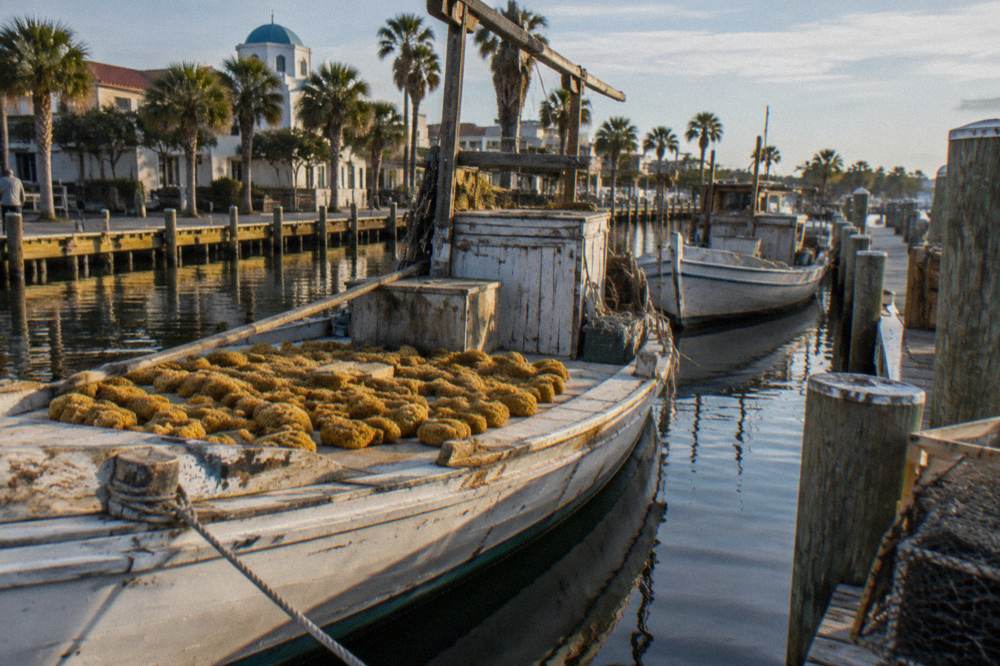
That history is why the feast day feels so rooted here. Many of the families whose sons dive for the cross descend from the divers who built the docks. The St. Nicholas Boat Line still runs a narrated Anclote River cruise with a live sponge diving demonstration on select departures from its dockside ticket booth at 693 Dodecanese Blvd, and the diver on those trips works the same way the original crews did. The demonstration happens on select departures only, so call ahead to confirm a diver is scheduled before you promise the kids. The boat line sells walk-up tickets at the dock and is operator-direct rather than listed on the booking sites.
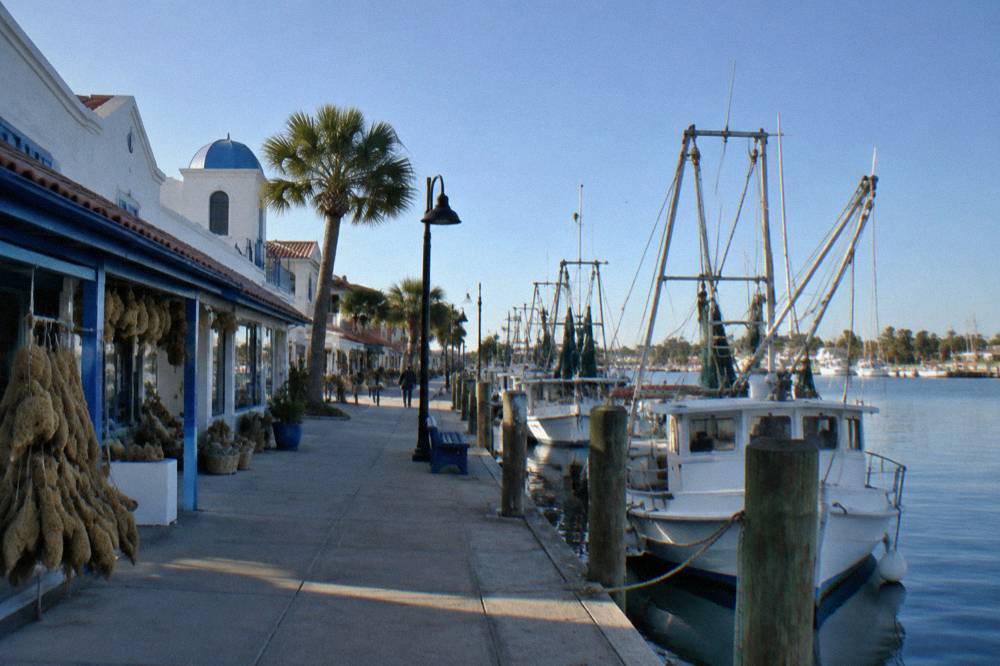
After the demonstration, the walk down Dodecanese Boulevard passes the sponge warehouses and shops that grew around the fleet. The docks cover roughly 48 acres along the boulevard according to the city's special area plan, and a historical marker added to the strip in April 2026 now notes its place in the state's heritage trail. The deeper background is in the guide to visiting the Sponge Docks, and the question of whether the sponge fleet still dives is answered in this look at the working docks today.
Can You Pair The Epiphany Trip With A Boat Tour?
Yes, and January 6 is built for it: the ceremony ends by early afternoon, the Sponge Docks are about a mile from Spring Bayou, and cruises run from the docks every day, so an afternoon sponge diving demonstration or an evening dolphin cruise slots into the same day without a car move. Book the cruise ahead, because feast-day walk-up demand is heavy.
The pairing works because of geography. Spring Bayou, the cathedral and the Sponge Docks sit inside the same small town, connected by walkable streets on a normal day and by a longer stroll on feast day when the closest roads close. A visitor who watches the dive in the morning can be on a boat by mid-afternoon. The featured evening dolphin cruise from Spongeorama Cruise Lines departs the Sponge Docks for a 2-hour run from $29 per person, with a 4.7 rating across 132 reviews on its listing, and it can be cancelled free of charge, which matters when January weather is still deciding what it wants to be. Check availability for the feast-day date once the schedule firms up.
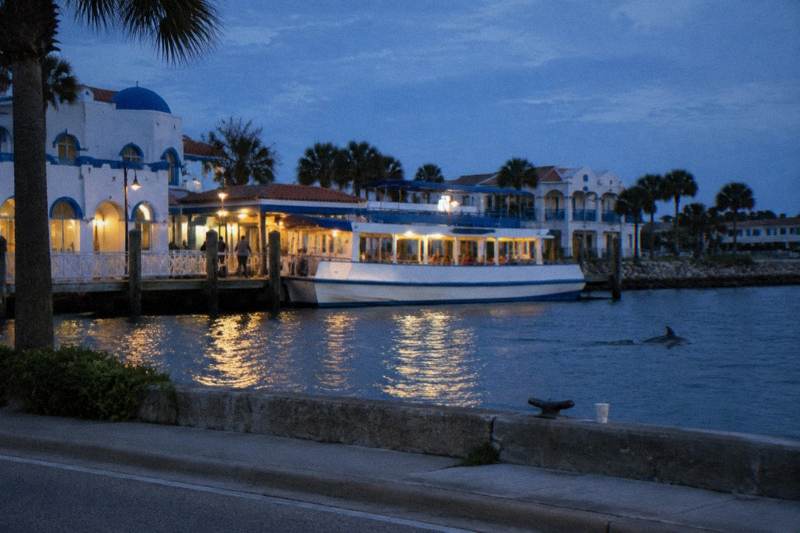
The cruise itself retraces the town's relationship with the water. The boat heads down the Anclote River past the working docks and out toward the Gulf, and bottlenose dolphins are frequently reported on these runs, especially in calm conditions near the Anclote Key sandbars. Sightings are never guaranteed on any trip, and federal law protects the animals: never feed or harass wild dolphins or manatees, and keep a respectful distance. The listing also names manatees and sea turtles as things to spot, with winter being the season manatees gather in Florida's warmer waters.
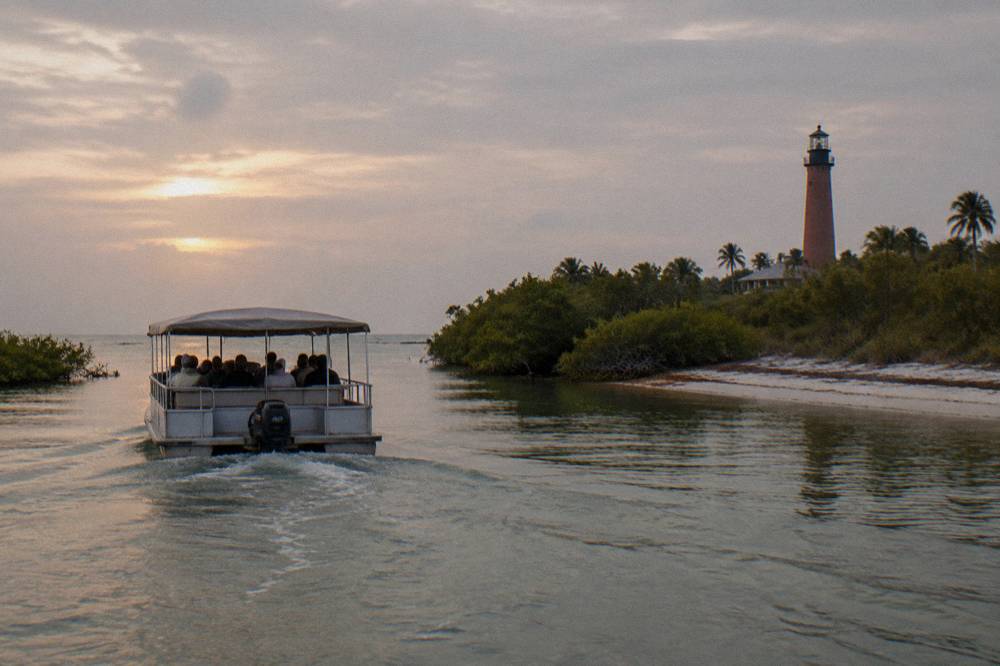
Here is how the main same-day options compare:
| Tour | Operator | Length | From (USD) | Rating on the listing |
|---|---|---|---|---|
| Evening Dolphin Cruise | Spongeorama Cruise Lines | 2 hours | $29 per person | 4.7 from 132 reviews |
| Sponge Diving Exhibition Cruise | St. Nicholas Boat Line | 45 to 90 minutes | $21 per person | No booking-page rating, operator-direct |
| Sunset Cruise | Odyssey Cruises | 2 hours | $27.99 per person | No booking-page rating, operator-direct |
| Dolphin and Shelling Adventure Island Cruise | Odyssey Cruises | 2 hours | $27.99 per person | No booking-page rating, operator-direct |
If the dove and the cross have you in a reflective mood, the sunset run down the Anclote River is a quiet end to the day; if the kids are restless after hours of standing at the bayou, the dolphin cruise is the livelier call. The wider field of options, including kayak and fishing trips, is compared in the boat tour comparison guide.
One planning note: the Odyssey boats are operator-direct, meeting at their dock across from Hella's Restaurant and Bakery, so you book with them directly rather than through a listing page.
What Is January Weather Like For The Feast Day?
January is one of the driest and mildest months in Tarpon Springs: normal highs run about 69 F and lows about 50.7 F, monthly rainfall averages under 2 inches, and Gulf water temperatures average about 60 F, cold enough that the cross dive is a genuine feat and warm enough that an afternoon boat ride is comfortable in a jacket.
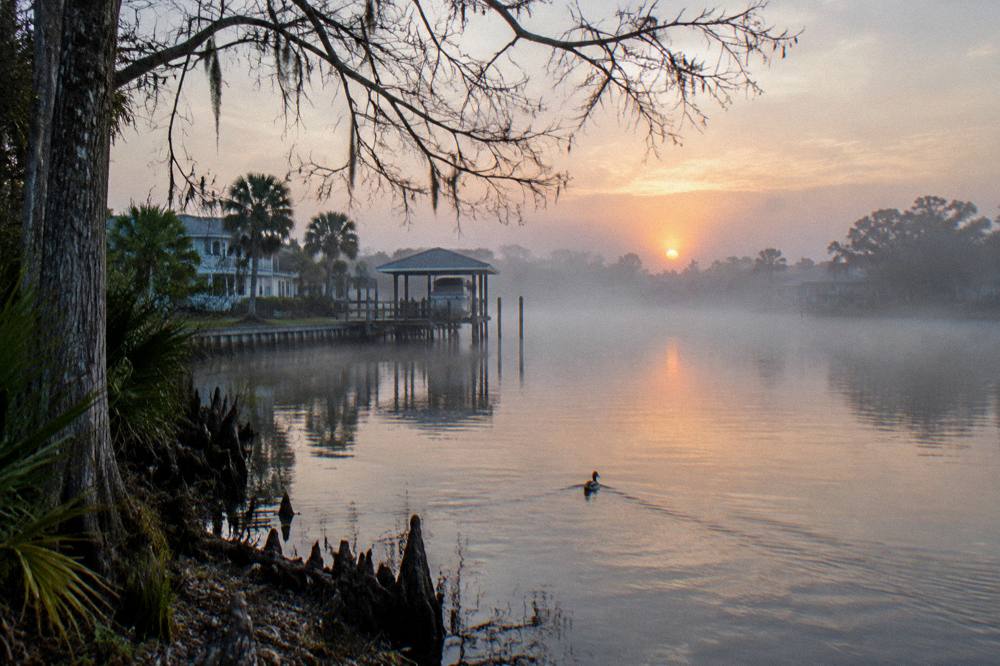
The climate record for the Tarpon Springs station puts January highs at 69.3 F and lows at 50.7 F on the 1991 to 2020 normals, with 1.90 inches of rain across the month, making it the driest month of the year locally. The wet season runs June to September, when monthly rainfall climbs to 7 or more inches, so a feast-day downpour is possible but not the pattern. Cold fronts do push through in January, and the dive goes ahead regardless of chill; the divers are in and out quickly, but spectators should plan for a morning that starts near 50.7 F.
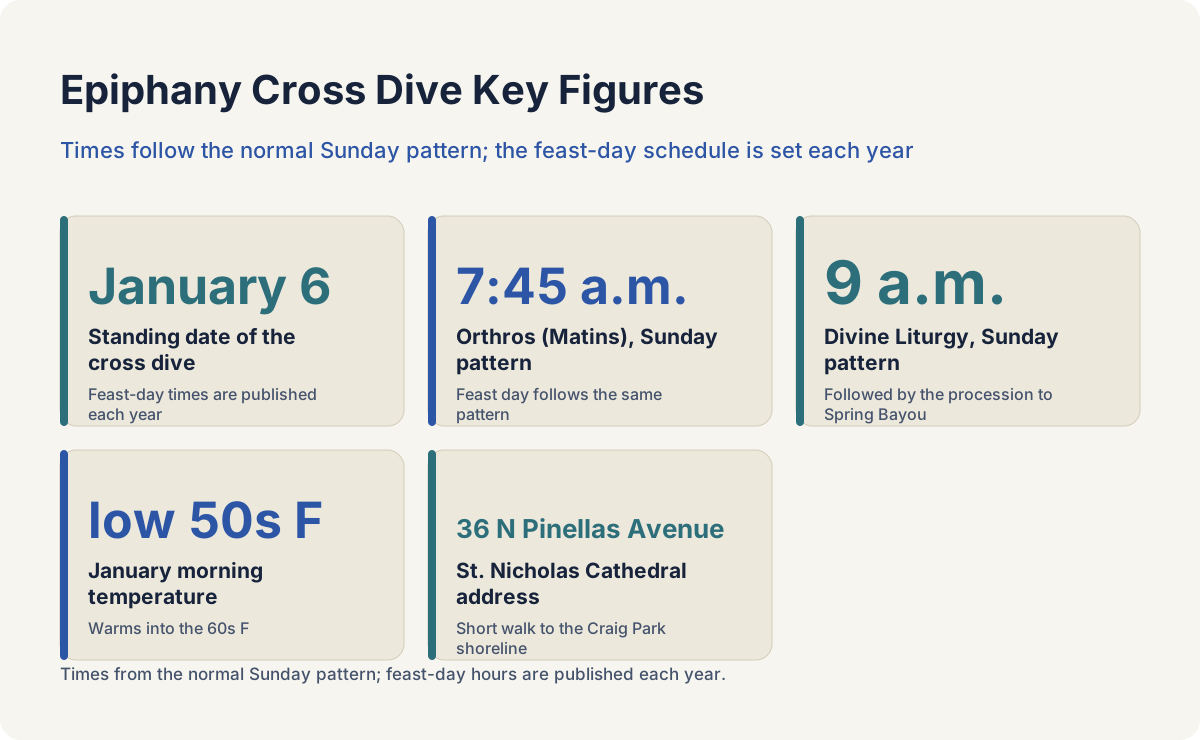
The water temperature explains half the drama. Gulf readings near the area average 59.8 F in January on the NOAA monthly means, and Spring Bayou sits a short way inland from that Gulf influence. The divers are in the water for seconds, but those are cold seconds. For spectators, the same numbers translate to a simple packing rule: layers for the morning at the bayou, and something windproof for an afternoon or evening boat, where the wind on the Anclote River takes a few degrees off the air.
Wildlife in January favors the boater. Manatees gather in Florida's warmer waters in winter, and the clear kayak listings that run seasonally from November to March are timed to exactly that pattern. A dolphin cruise in January is as good as any month, since bottlenose dolphins are resident here year round and operators report them on most cruises, with no month reliably better than another.
Weather cancellations are the exception rather than the rule in January, but they happen; small craft advisories occasionally close the Gulf runs when winds reach 20 to 25 knots. The guide to weather and boat tour cancellations explains who makes the call and how refunds work. Hurricane season ends November 30, so it is not a January factor; the National Hurricane Center's climatology page has the official season dates.
How Do You Plan An Epiphany Weekend Around The Dive?
Build the weekend backward from January 6: book lodging early because the event fills the town, spend the feast morning at Spring Bayou, then give the Sponge Docks a full afternoon and a boat tour, and save a second day for Anclote Key or a kayak paddle through the winter manatee season. Two nights is the practical minimum.
Lodging is the first thing to lock down. Tarpon Springs has a limited hotel stock and the feast brings a crowd the city's own planning documents call the largest Epiphany celebration in the western hemisphere, so rooms and vacation rentals in walking distance of the cathedral go first. The guide to where to stay in Tarpon Springs maps the neighborhoods against the bayou and the docks. Once the bed is secured, book the boat: feast-day cruises sell out, and the question of how far ahead to book has its own answer in this booking-timing piece.
A workable shape for the weekend:
| When | Plan | Notes |
|---|---|---|
| Weeks ahead | Book lodging and the feast-day cruise | Free-cancellation options reduce weather risk |
| January 5 evening | Arrive, dinner on Dodecanese Blvd | Greek bakeries close early; go before dark if desserts are the goal |
| January 6 morning | Services view from outside or head straight to Craig Park | Banks fill hours before the procession |
| January 6 afternoon | Sponge Docks: sponge shops, St. Nicholas Boat Line demonstration | Call ahead to confirm a diver is scheduled |
| January 6 evening | Evening dolphin cruise or sunset cruise from the docks | From $29 and $27.99 per person respectively |
| Second day | Anclote Key trip, clear kayak paddle, or fishing charter | The lighthouse is seen from the water only |
The second-day options deserve their own thinking. The Anclote Key boat trip reaches a four-island preserve three miles offshore, 11,773 acres with the 1887 lighthouse on its southern end; the park's official page still lists the dock, boardwalk and lighthouse as closed for storm recovery, so see the light from the water and expect no landing at that end of the island. In winter, the clear kayak tours timed to manatee season run from November to March and launch from Belle Harbour Marina, a short drive from the docks.
However you fill the second day, keep the feast day itself loose in the middle. Roads close, crowds move slowly, and the best hours of January 6 in Tarpon Springs are the unplanned ones: a bakery line, a sponge shop conversation, a bench above the bayou where a dove was released that morning.
Common Questions About The Epiphany Cross Dive
When is the Epiphany cross dive in Tarpon Springs?
The cross dive is held on January 6 each year, following Orthros and Divine Liturgy at St. Nicholas Greek Orthodox Cathedral. The standing date is fixed; the hour of the dive and the full day's program are published by the cathedral closer to each feast, and the 2027 schedule has not been announced yet.
Where is the best place to watch the cross dive?
The grassy banks of Spring Bayou along Craig Park, a short walk from the cathedral, are the public viewing area. The banks fill hours before the procession arrives, so come early with a chair, and expect road closures and long walks from parking.
Is the Epiphany celebration free to attend?
Watching the blessing, the dove release and the cross dive from the public shoreline costs nothing. No official attendance figure is published, but the crowd is large, and parking around the bayou is the main thing to plan for.
Who retrieves the cross, and what does it mean?
Young men of the parish dive for the cross after the Archbishop blesses the waters and a white dove is released. The one who brings the cross up is considered blessed for the year and is honored by the community afterward.
Can you take a boat tour on the same day as the cross dive?
Yes. The Sponge Docks sit about a mile from Spring Bayou, and cruises run daily, including the evening dolphin cruise from $29 per person and the sponge diving demonstration from $21. Book ahead for January 6, since feast-day demand is heavy, and look for free-cancellation options in case of weather.
Is January a good month to visit Tarpon Springs?
Yes. January is the driest month of the year locally, with normal highs near 69.3 F and lows near 50.7 F, and it falls inside manatee season, when clear kayak tours run from November to March and manatees gather in Florida's warmer winter waters.