Are Sponge Docks Still Active? Do They Still Dive For Sponges In Tarpon Springs?
Yes, the Tarpon Springs Sponge Docks are still an active working waterfront, and commercial sponge divers still harvest Gulf sponges. Here is what is true, what is show, and how to see both.
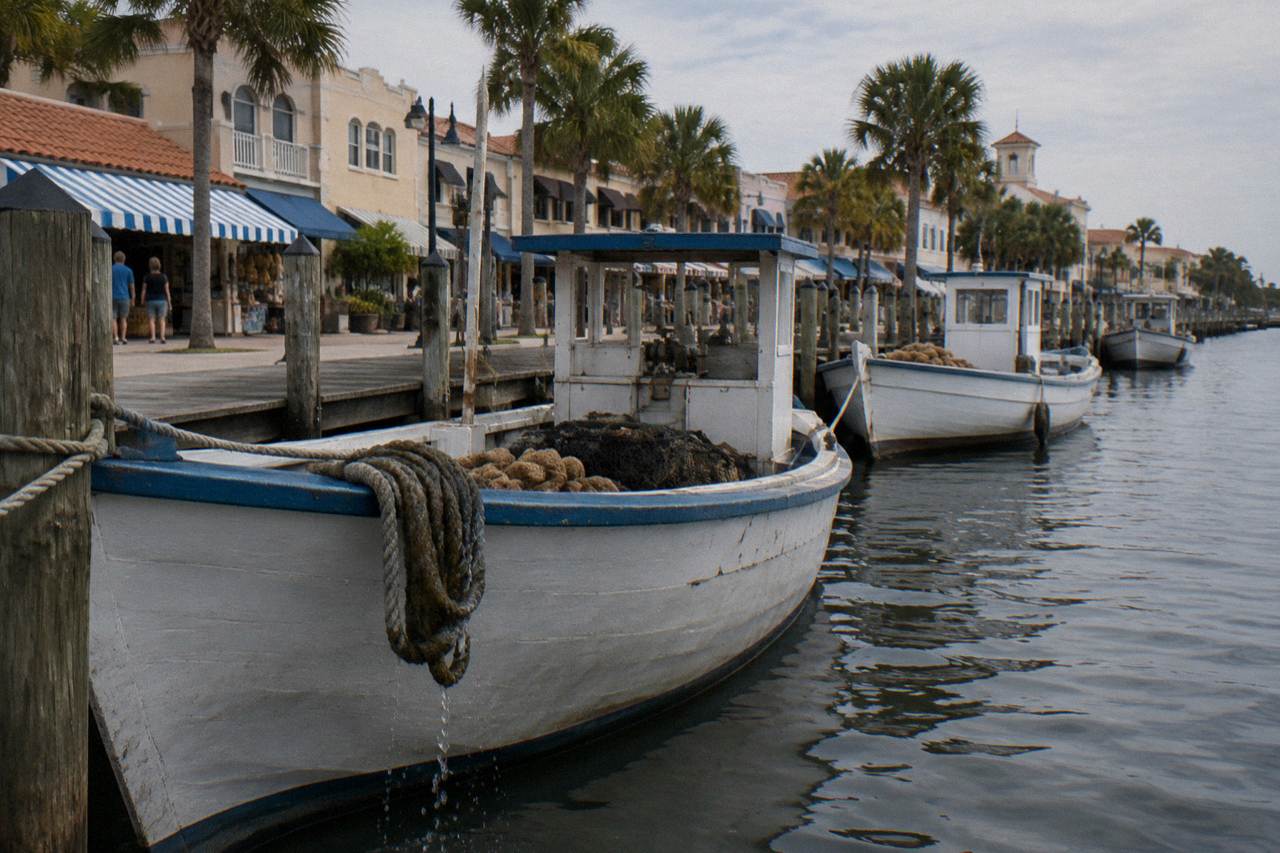
The Sponge Docks in Tarpon Springs sometimes get described as a tourist street with a Greek restaurant problem and a museum story attached. That description is wrong in a way that matters to anyone deciding whether to visit. The docks along Dodecanese Boulevard are still a working waterfront: commercial sponge diving remains active in Tarpon Springs, a dated local news item from October 2026 confirms the traditional harvest continues, and the boats that tie up along the seawall are part of an industry that has operated here for well over a century. The question most visitors actually arrive with is the one in this article's title, and the honest answer to both halves is yes, with a few useful details about what "active" means in practice.
Are Sponge Docks Still Active? Do They Still Dive For Sponges In Tarpon Springs?
Yes, the Sponge Docks are still active, and yes, divers still harvest sponges in Tarpon Springs. Commercial sponge diving continues using traditional methods, and a dated October 2026 news item confirms the harvest remains a live business rather than a reenactment. The historic docks along Dodecanese Boulevard still host the fleet, the sponge exchanges, and the shops that process and sell the raw Gulf sponges.
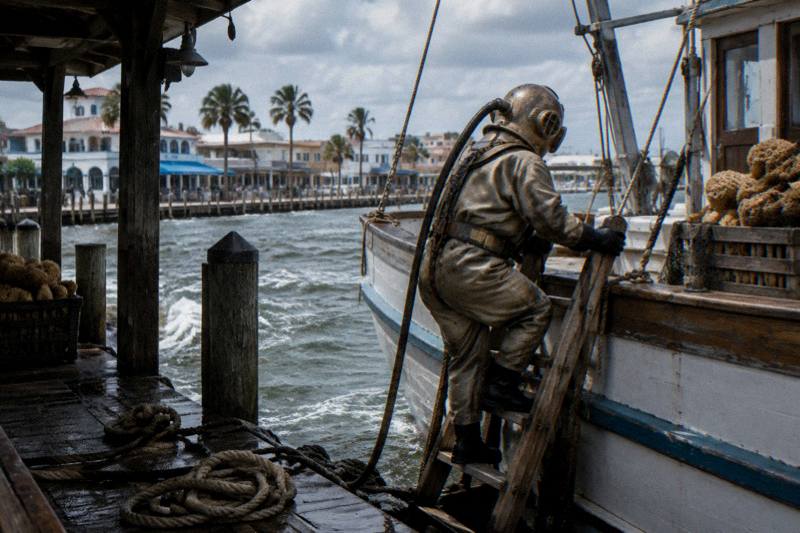
The useful distinction is between the working side and the show side, because both exist and both are genuine. On the working side, boats go out and bring back natural sponges from Gulf beds, the same basic trade John K. Cheyney started here in the 1880s. On the show side, operators like St. Nicholas Boat Line run short cruises on which a diver in traditional gear, the brass helmet and weighted suit, goes over the side and comes up with a sponge so passengers can see how the harvest is done. Neither side is fake. The demonstration is a performance of a real technique, performed by people connected to a real trade.
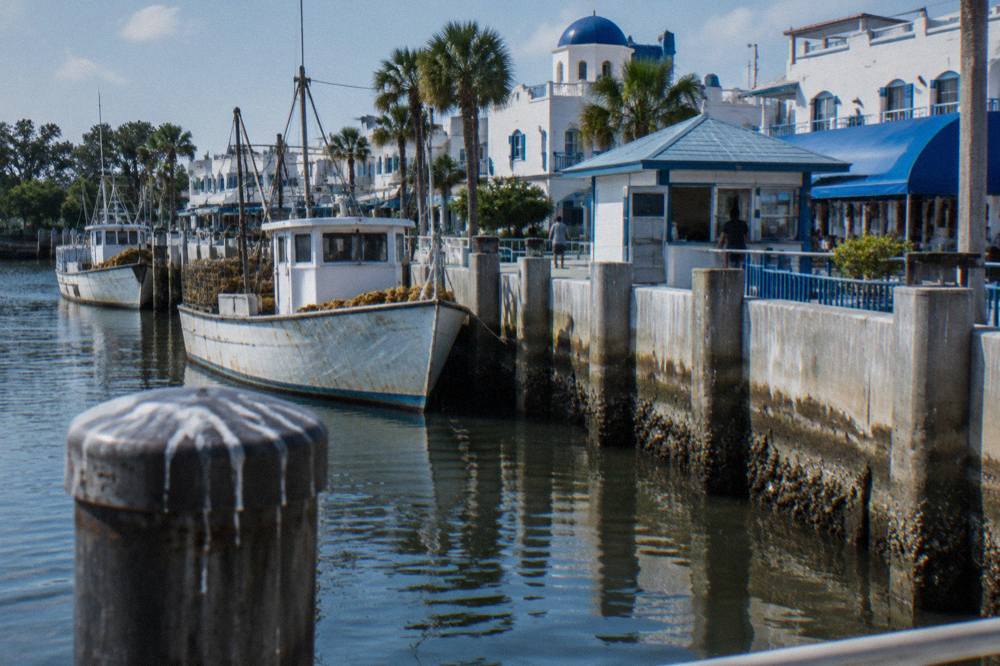
What the docks are not is a place with a published fleet census. No official page states how many boats currently work the sponge grounds, and any number you might see quoted in passing should be treated with caution. What can be said plainly is that the trade survived a genuine near-death experience: a 1947 red tide wiped out the Gulf sponge fields and pushed many boats into shrimping, and the beds later recovered enough for diving to resume. An industry that came back from that is not the kind of thing that quietly folds without anyone noticing, and the shops along Dodecanese Boulevard are still stocked with locally harvested wool, yellow and grass sponges rather than exclusively imported product.
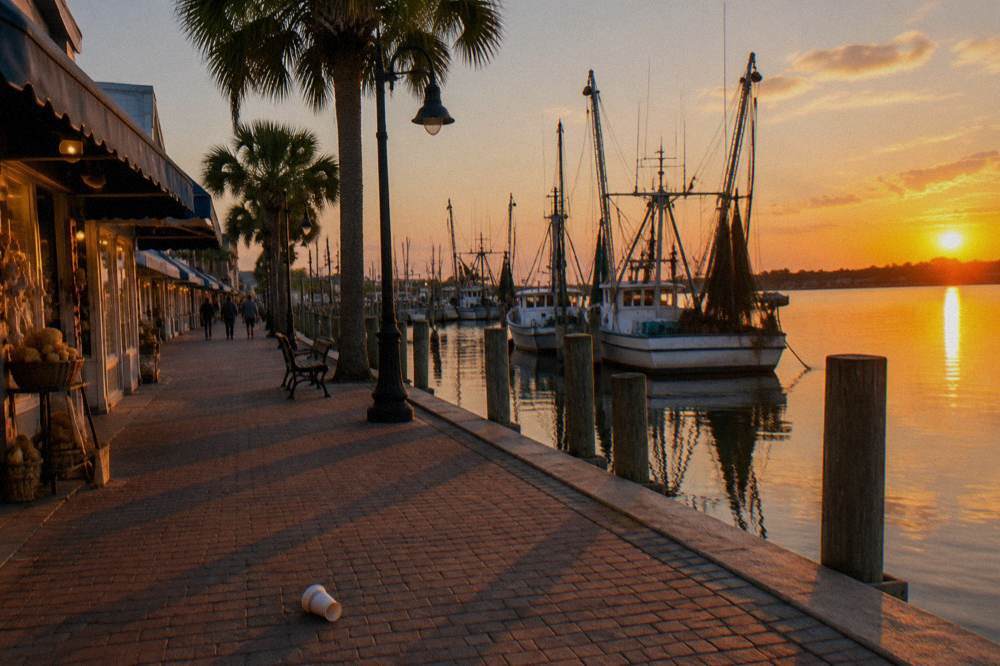
If you want the shortest possible proof that the docks are alive, walk to the seawall and look at the water. Between the sightseeing boats you will find working vessels, and the sponge warehouses behind the tourist storefronts are the back half of the same businesses. Ask in almost any sponge shop where their stock comes from and the answer traces back to Gulf beds and local divers, not a shipping container. The two halves of the street, the working half and the visitor half, are separated by about twenty feet of concrete and nothing else.
Where The Working Sponge Boats Dock Today
The working fleet and the tourist strip share the same ground: Dodecanese Boulevard, about 48 acres of waterfront that a City of Tarpon Springs planning document designates as the Sponge Docks special area. St. Nicholas Boat Line sits at 693 Dodecanese, Spongeorama at 512, and Odyssey Cruises at 776, all within a few minutes' walk of one another. The sponge boats and the excursion boats tie up along the same stretch of riverfront.
This overlap is the honest answer to a second question visitors rarely ask out loud: is the "sponge docks" name just branding? It is not. The city's own Sponge Docks and Community Redevelopment Area plan treats the stretch as a working maritime district, and the residential streets behind it, the bayous and the river mouth, exist because of the sponge trade and the Greek divers John Cocoris recruited here beginning in 1905. The restaurants, the bakeries and the souvenir shops came later, wrapped around the industry rather than replacing it.
The docks have also picked up a small mark of official recognition recently. In April 2026 a historical marker for the Sponge Docks was announced as part of a state heritage road-trip program, a modest but real acknowledgment that the site is treated as a living historic place rather than a commercial recreation of one. And the street itself is receiving public investment: a $4.8 million flood-abatement project on Dodecanese Boulevard moved forward in January 2026, which is the sort of thing cities do to protect an asset they expect to keep. Investment follows intent, and the intent here is clearly to keep the waterfront working.
If you are pairing a walk down the strip with time on the water, the sponge-diving demonstration cruise is the direct way to see the trade performed. The St. Nicholas exhibition cruise runs from $21 per person and lasts between 45 and 90 minutes depending on the departure; it is sold operator-direct at the dock ticket booth rather than through a booking site, and a live diver demonstration happens on select departures, so call the boat line ahead to confirm a diver is scheduled for the trip you want. You can also Check availability through the tour page here, and read more in the sponge diving boat tour guide.
What The Diver In The Brass Helmet Is Actually Doing
The demonstration diver on a St. Nicholas cruise uses hookah-style surface-supplied air and a heavy traditional suit to walk the river bottom, cut a sponge by hand and return it to the deck, which mirrors how the commercial harvest is performed on the Gulf grounds. The technique predates modern scuba gear and was brought here by Greek sponge divers recruited after 1905.
The historical thread is worth a minute because it explains why Tarpon Springs, of all Florida towns, has a sponge fleet at all. Cheyney founded the first local sponge business in the 1880s, but the industry stayed small until Cocoris recruited divers from Greece, where helmet diving for sponges was an established craft. Those divers could work deeper water than the hook-and-pole crews that preceded them, and the town that grew around their trade is still visibly Greek in its churches, its food and its January Epiphany celebration, when a cross is cast into Spring Bayou and young men dive for it. The community has held the cross dive for close to a century, and the diving skill it draws on is the same skill the sponge boats depended on.
A practical note for anyone booking around the demonstration: because the diver appears on select departures only, the schedule question matters more than the price question. The trip is already the cheapest boat ride on this site's roster, from $21, so the real risk is showing up for a departure without a diver. Call ahead, or use the tour page to see times before you drive in. For more on the wider Greek story of the town, the Tarpon Springs Sponge Docks visit guide covers the shops, the bakeries and the walking route.
One more honest limit: the demonstration cruise is a river trip, not a trip to the actual sponge beds. The commercial grounds lie offshore in the Gulf, and watching a show diver in the Anclote River is a display of method, not a ride-along on a working harvest. Nobody sells ride-alongs on the working boats, and that is exactly as it should be for a fishery.
A Short History Of The Sponge Trade, With Its Collapses
The Tarpon Springs sponge trade rose with Greek helmet divers recruited from 1905, was devastated when a 1947 red tide destroyed the Gulf sponge fields, shifted many boats to shrimping, and then recovered as the beds regrew. Commercial diving remains active today. No official fleet size is published, so this history is the honest way to understand the industry's scale.
The story is easiest to read as a table of eras:
| Period | What happened | What it means for visitors |
|---|---|---|
| 1880s | John K. Cheyney founds the first local sponge business | The docks began as industry, not tourism |
| 1905 onward | John Cocoris recruits Greek helmet divers | Deep-water diving makes Tarpon Springs the sponge capital; the Greek community takes root |
| 1947 | A red tide wipes out the Gulf sponge fields | Many boats switch to shrimping; the town nearly loses its founding trade |
| Later years | Sponge beds recover | Diving resumes at a smaller scale |
| Today | Commercial diving remains active; a dated October 2026 news item confirms the traditional harvest continues | The working waterfront is real, with show-boat demonstrations at the docks |
Two things in that history deserve emphasis. The first is the red tide connection, which still matters: harmful algal blooms remain the trade's standing risk, and the Florida Fish and Wildlife Conservation Commission publishes statewide red tide status updates anyone planning a Gulf trip can check. The second is the recovery itself. Sponges are a renewable harvest when the beds are managed, and the fact that the fishery came back after 1947 is why a visitor today can still buy a sponge that was cut by a diver from a boat based on this river.
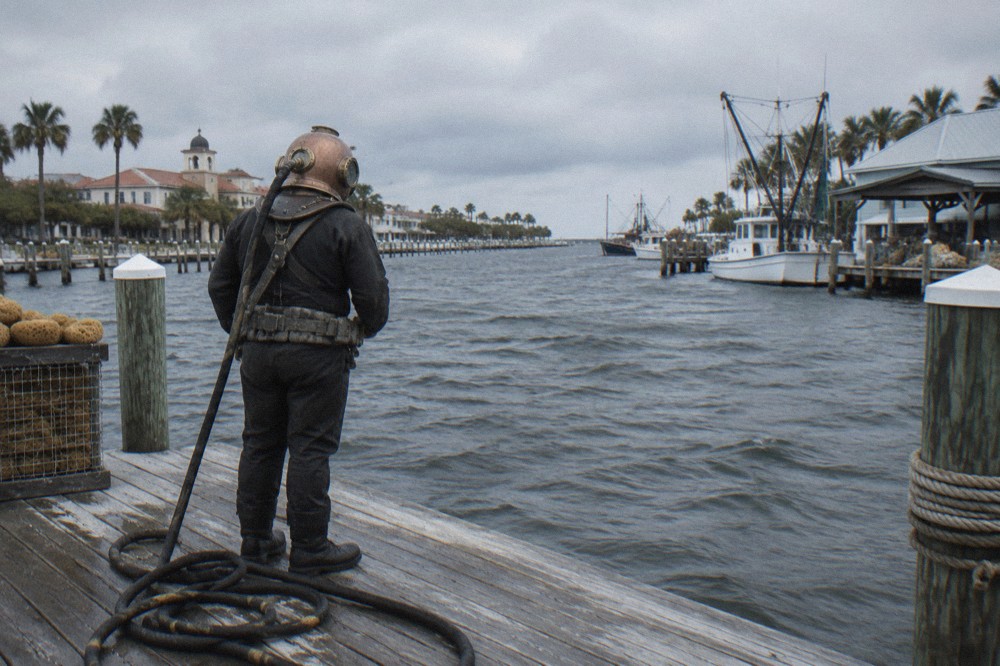
The gear in that photograph lineage, the helmet and the suit, is not costume. It is the working inheritance of the Greek divers, and the fact that passengers can still watch it deployed from a boat on this river, within sight of the bakeries, is a genuinely unusual thing for an American tourist street to offer. The 1887 Anclote lighthouse is another piece of the same maritime era, still standing at the southern end of Anclote Key out in the Gulf, though storm recovery closures on the island mean it is seen from the water only these days.
The Water Around The Docks: What Else You Can See
The same riverfront that hosts the sponge boats also launches dolphin cruises, sunset cruises and island trips, because the Anclote River mouth leads straight to the Gulf and the Anclote Key barrier islands three miles offshore. The working fleet and the excursion fleet share one harbor, so a visitor can cover both the industry story and the wildlife story in a single afternoon without moving the car.
The wildlife half of the waterfront is the more obvious one. Bottlenose dolphins are reported year-round by the cruise operators here, most often in calm conditions and around the Anclote Key sandbars at low tide, where baitfish concentrate. The evening dolphin cruise from Spongeorama Cruise Lines runs two hours from $29 per person, with refreshments sold onboard available to buy onboard. Its live listing shows a 4.7 rating from 132 reviews. Wild dolphins are wild, of course: no operator guarantees sightings, and any cruise that promises them should be treated with suspicion. What the listings actually name as things to spot are dolphins, manatees and sea turtles, in that order of likelihood.
Between the sponge demonstration and the dolphin cruise sits a quieter option that fits the historic-waterfront mood. The Odyssey sunset cruise, from $27.99 per person for two hours, runs a narrated trip down the Anclote River into the Gulf at the end of the day, and it is sold operator-direct from the Odyssey dock across from Hella's bakery. It carries no booking-page rating yet, which is worth knowing but not a reason to skip it; the operator is one of the four ferry providers the state park itself lists for Anclote Key service.
If the island end of that route tempts you, read the Anclote Key boat trip guide before you book anything. The short version: the park is 11,773 acres across four islands with no entrance fee and no provisions, the 1887 lighthouse is currently seen from the water only, with its dock, boardwalk and interior closed for storm recovery according to the official Florida State Parks page, and ferries do not drop off overnight campers. The sandbars and shelling, though, are exactly what they look like from the deck of a cruise boat.
Planning Your Visit To A Working Waterfront
Visit the Sponge Docks on a weekday morning if you want the working-fleet feel with fewer crowds, pick a departure with a diver scheduled if the demonstration is your priority, and budget for a short boat trip from $21 upward. Parking along Dodecanese is a mix of paid lots and free side streets, and no official fee schedule exists, so bring small bills and expect a short walk on weekends.
A sample half-day that covers both halves of the title question:
| Time | Activity | Notes |
|---|---|---|
| Morning | Walk Dodecanese Boulevard seawall | Look for working sponge boats among the excursion fleet |
| Late morning | St. Nicholas sponge diving exhibition cruise | From $21; call ahead to confirm a diver on your departure |
| Lunch | Greek restaurant on the strip | Mykonos has served Greek food here since 1992 |
| Afternoon | Sponge shops and the free sponge movie at the Spongeorama factory | Good rain backup |
| Evening | Sunset cruise or dolphin cruise | From $27.99 and $29 respectively |
Season and weather shape the day more than most visitors expect. Hurricane season runs June 1 to November 30, and boat trips cancel for small craft advisories, which do occur; the question of when trips cancel is covered in full in the weather and cancellation guide. Event weekends change the character of the street entirely: the Fall Craft Festival fills Dodecanese on October 10 and 11, 2026, and the 38th Annual Seafood Festival follows on November 7 and 8, both free to attend. On those dates the docks are very much alive, just alive in a festival way rather than a fishery way.
For anyone building a longer stay around the waterfront, Tarpon Springs Boat Tours compares every cruise, kayak tour and charter that departs from these docks, including the full sponge-diving options, so you are not guessing at prices when you arrive. There is also a plain free-things angle if you are traveling on a budget: the seawall walk, the shops and the free sponge-harvest movie at the Spongeorama sponge factory cost nothing, and the free things to do guide pairs them with the cheapest boat ride on the roster.
The honest closing picture is this: the Sponge Docks are a rare American case of a tourist street that is also the thing it advertises. The sponges in the shops were cut from the Gulf by divers who still work these waters, the boats that carry visitors perform a trade that never stopped, and the town around it, cathedral, bayous and bakeries, exists because of that trade. Few day trips pay off their premise this completely.
Common Questions About Sponge Diving In Tarpon Springs
are sponge docks still active? do they still dive for sponges in tarpon springs?
Yes to both. Commercial sponge diving remains active, confirmed by a dated October 2026 local news item, and the docks on Dodecanese Boulevard remain a working waterfront. Demonstration dives with a diver in traditional gear run on select St. Nicholas Boat Line departures.
Can you watch a sponge diver on a boat tour?
Yes. The St. Nicholas sponge diving exhibition cruise, from $21 per person, runs a narrated Anclote River trip with a live diver demonstration on select departures. Call the boat line ahead to confirm a diver is scheduled, and buy tickets at the dock booth, since this trip is sold operator-direct.
Why are there Greek sponge divers in Florida?
John Cocoris recruited experienced helmet divers from Greece starting in 1905, and the community they founded has shaped Tarpon Springs ever since, including the annual Epiphany cross dive at Spring Bayou held on January 6.
Did the sponge industry ever stop?
Nearly. A 1947 red tide destroyed the Gulf sponge fields and pushed many boats into shrimping, but the beds recovered and diving resumed. No official fleet size is published today, but the traditional harvest continues.
Are the sponges sold at the docks real sea sponges?
The shops along Dodecanese sell natural Gulf sponges harvested by the local fleet, alongside the usual souvenir stock. The Spongeorama sponge factory also shows a free movie on sponge diving and harvesting.
How much time should I allow for the Sponge Docks?
About half a day covers the walk, a short boat trip and lunch. Add time on festival weekends, such as the Seafood Festival on November 7 and 8, 2026, when the street fills early.