What Is Tarpon Springs Famous For?
Tarpon Springs is famous for sponges, Greek heritage and the Epiphany cross dive. This guide explains what made the town, what still works on the waterfront, and which boat rides show it best.
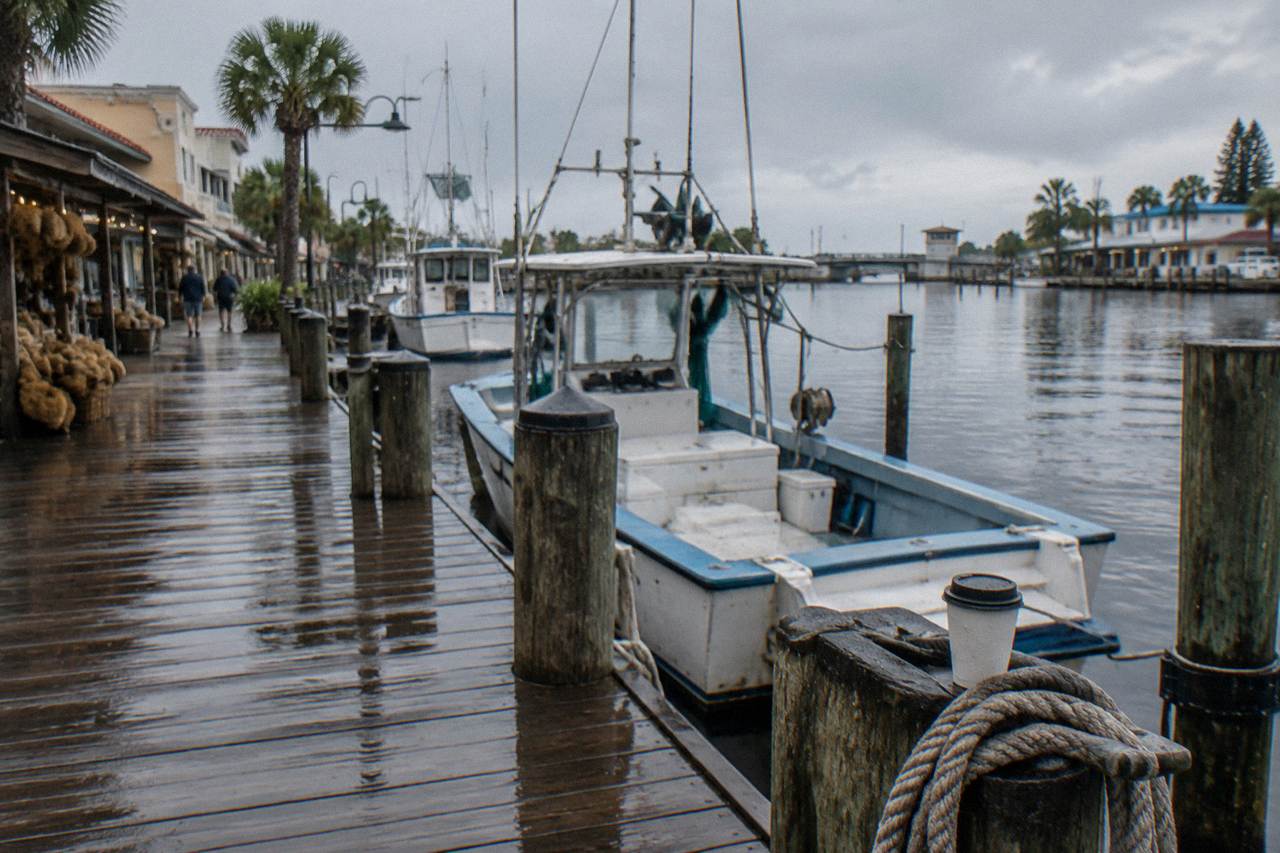
Tarpon Springs sits where the Anclote River meets the Gulf of Mexico, about thirty miles northwest of Tampa, and its reputation rests on one of the strangest origin stories in Florida. A Gulf sponge fishery, Greek divers recruited across the Atlantic, and a church tradition held every January, all converged on a single stretch of dock. The town is still defined by that waterfront, and most of what visitors come to see sits within a few blocks of it.
What Is Tarpon Springs Famous For?
Tarpon Springs is famous for being the center of Florida's natural sponge industry, for the Greek heritage that industry brought to the town, and for the Sponge Docks on Dodecanese Boulevard where sponges are still sold and boats still depart daily. It is also home to the Epiphany cross dive at Spring Bayou every January 6, an Orthodox tradition described as the largest of its kind in the western hemisphere.
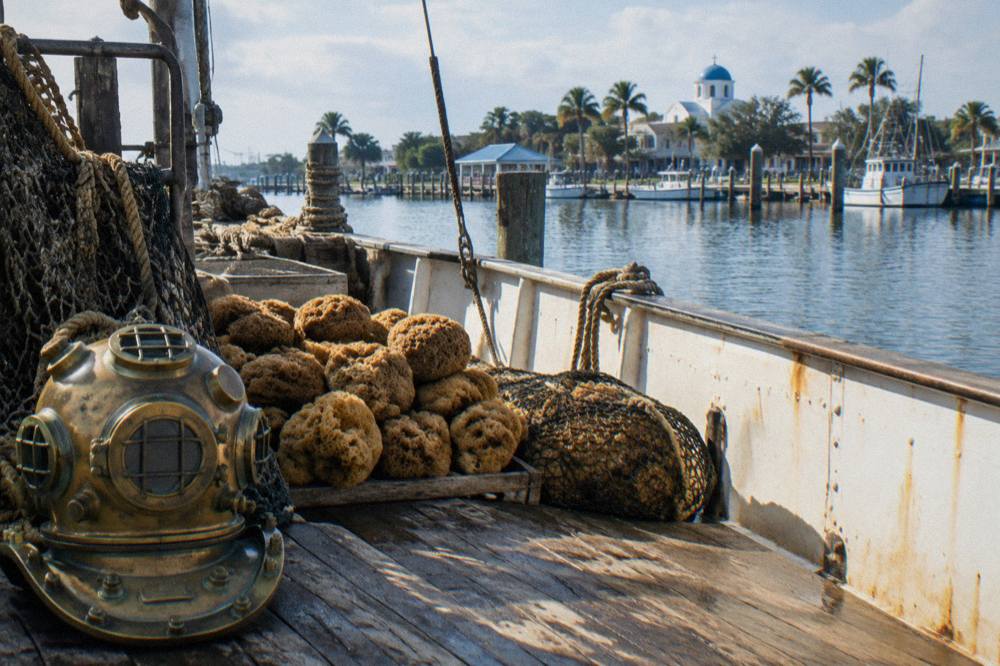
The short version people usually give is "sponges," and that is accurate, but it undersells the story. In the 1880s a businessman named John K. Cheyney founded the first local sponge operation, harvesting Gulf sponges with hooking techniques from small boats. Those methods worked, but they damaged a share of the catch. In 1905 John Cocoris recruited divers from Greece, men who had trained in the sponge fisheries of the Aegean and the eastern Mediterranean, and they brought with them hard-hat diving suits and a wholly different way of working the sea floor.
That single hiring decision reshaped the town. Families followed the divers, a Greek Orthodox parish took root, and Tarpon Springs grew a Greek community that has shaped the town ever since. The industry itself nearly died in 1947, when a red tide wiped out the Gulf sponge fields and many boats switched to shrimping. The sponges eventually recovered, and so did the fishery. A dated October 2026 news item confirms commercial sponge diving remains active today, still using traditional methods. If you want to see the working docks for yourself, this guide to the Sponge Docks today separates the real harvest from the tourist show.
What that history means for a visitor is simple: the famous things here are not museums behind glass. Sponges are sold in shops steps from where boats load passengers, the boats themselves run trips down the same river the divers worked, and the church at the center of the Epiphany tradition holds services a short walk from the docks. The past and the working waterfront occupy the same few acres.
If you want to see the famous stretch from the water rather than the sidewalk, the boats are the natural way to do it. Three styles of trip cover it well:
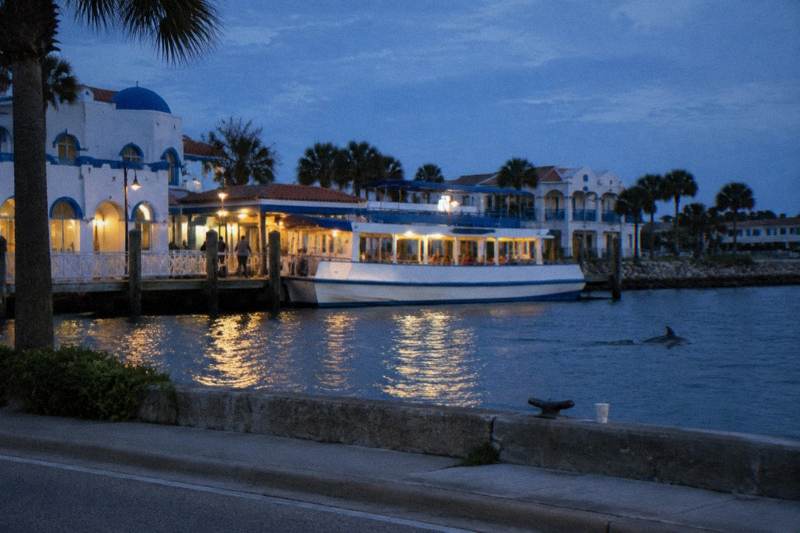
The evening dolphin cruise from Spongeorama Cruise Lines is the most popular single boat ride on the docks, a two-hour trip from $29 per person rated 4.7 across 132 reviews. It leaves from the Sponge Docks, which means the first ten minutes of the ride are the famous waterfront itself.
The Sponge Docks And The Working Waterfront
The Sponge Docks are the roughly 48-acre waterfront district along Dodecanese Boulevard where the sponge trade still operates, alongside Greek restaurants, bakeries, sponge shops and the boat lines that run dolphin cruises, sponge diving exhibitions and island trips. The docks are free to walk, open year-round, and remain the single biggest draw in the city.
Dodecanese Boulevard takes its name from the Greek islands, and the street reads like a compressed version of that heritage. Sponge warehouses sit next to pastry shops, charter booths sit next to tavernas, and the boats moored along the seawall range from working sponge boats to passenger cruise vessels. Mykonos restaurant, a Greek institution on the docks, has served food there since 1992, long enough that many of its regulars now bring their grandchildren. The street smells at different points of salt, coffee and baking, which is about as honest a summary of the place as any.
The docks are also still a commercial address, not only a tourist one. Sponge shops receive Gulf-harvested stock, the boat lines run daily, and in September 2026 two neighboring shop owners on Dodecanese were making lighthearted social media videos together to keep the slow season interesting, a small story that captures how personal the businesses here are. The city has also invested in the street's future: a $4.8 million flood abatement project along Dodecanese Boulevard moved forward in January 2026, an acknowledgment that the waterfront's low elevation is a long-term issue for everything built on it.
For planning purposes, the docks are compact. Everything of note sits within about half a mile of riverfront, and the boat departure points are all on or just off Dodecanese itself. The Sponge Docks visit guide covers walking the street in detail, and the parking and boarding guide explains where to leave the car, since no official fee schedule exists for the lots and street spots fill quickly on weekends.
A boat ride is the easiest way to see the district in context. The river carries you past the seawall, under the bridge and out toward the Gulf, and the narrated trips point out the sponge boats and the river's history as you go. Check availability on the evening cruise if a sunset departure fits your plans, since the evening slots are the ones that sell out first.
Greek Heritage And The Epiphany Cross Dive
Tarpon Springs is famous among Greek Americans for its Epiphany celebration, held every January 6 at St. Nicholas Greek Orthodox Cathedral and Spring Bayou. After the liturgy, the Archbishop blesses the waters, a white dove is released, a cross is cast into the bayou, and young men dive for it; the retriever is considered blessed for the year.
The cross dive has been held, in the cathedral's own words, for close to a century, and a City of Tarpon Springs planning document calls it the largest annual Epiphany celebration in the western hemisphere. No official attendance figure is published, but anyone who has stood on the bayou's banks on January 6 does not need one; the park fills, the surrounding streets close, and the town's population visibly swells for a single afternoon. The event is tied to the standing date of January 6, and the 2027 schedule had not been published as of early October 2026, so travelers planning around it should watch the cathedral's announcements rather than assume details.
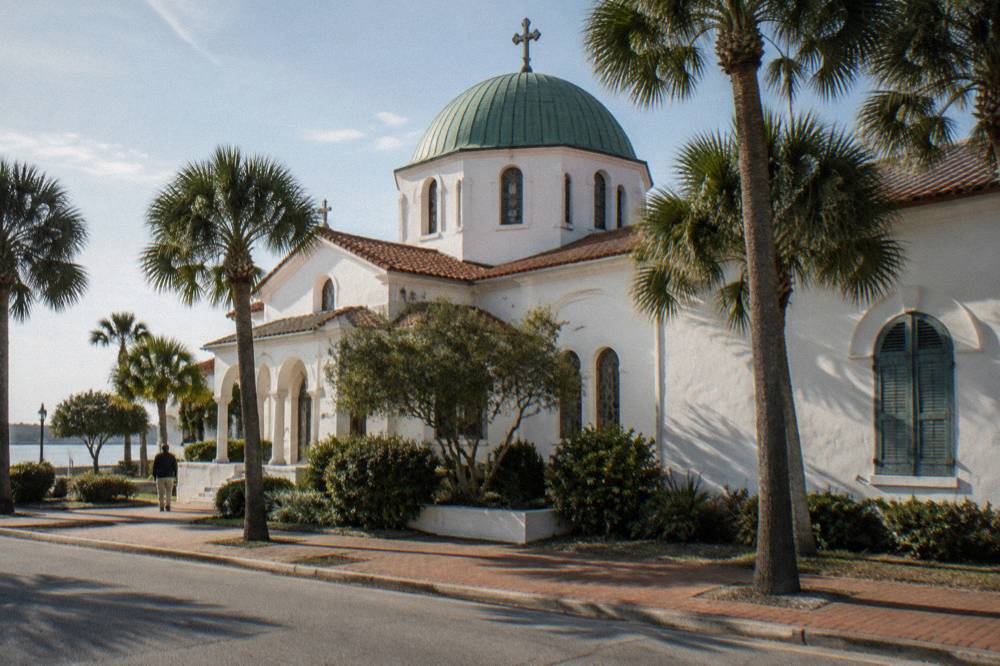
St. Nicholas Cathedral itself sits at 36 N Pinellas Avenue, a few blocks inland from the docks, and is the spiritual center of the community the sponge industry created. The cathedral publishes its service times: Sunday Matins at 7:45 a.m., Divine Liturgy at 9 a.m., Wednesday Parakleisis at 6 p.m. and Saturday Vespers at 6 p.m. Visitors are welcome to view the interior outside service times, and the Byzantine-style building is worth ten quiet minutes even for travelers with no other connection to the tradition. The cathedral maintains its own Epiphany page with the ceremony's order of events.
The dove release comes first, then the blessing, then the cross. Teenage and young adult men of the parish wait in the water or at its edge, and the moment the cross hits the surface is a genuine contest. Families stake out spots around Spring Bayou hours ahead. The dive is over in seconds, but the celebration continues through the afternoon with food, music and gatherings across the town, and the retriever is honored at a banquet that evening.
Greek food is the everyday expression of the same heritage, and the docks deliver it densely: bakeries selling honey-soaked pastries, restaurants grilling octopus and lamb, markets with imported cheeses and olive oils. A practical note for trip planning, tasting portions at the bakeries usually run a few dollars each and the restaurants cluster their busiest hours between noon and 2 p.m., so an early or late lunch pays off in shorter waits.
Do They Still Dive For Sponges?
Yes, commercial sponge diving remains active in Tarpon Springs, using traditional methods to harvest natural sponges from Gulf beds. The most visible proof is the St. Nicholas Boat Line exhibition cruise, a narrated Anclote River trip from $21 per person that includes a live sponge diver demonstration in a vintage hard-hat diving suit on select departures.
The question sounds odd to anyone who assumes the industry is a memory, but it is one of the most common things people ask about the town, and the answer is genuinely yes. Sponges are harvested from the Gulf, processed and sold on the docks, and the harvesting itself is still done by divers rather than dredges. Natural sea sponges, unlike synthetic ones, hold more water and last for years when rinsed and dried, which is why the shops on Dodecanese sell them alongside the souvenirs. The sponge diving guide covers the how of the fishery in depth.
The St. Nicholas Boat Line, at 693 Dodecanese Boulevard, has been running its exhibition cruise for decades, and it is the one product in town that shows the industry's signature image live: a diver in the brass-helmeted suit descending on a hookah air line while a narrator explains the fishery's history. The trip runs 45 to 90 minutes depending on the departure, and the live diver appears on select sailings only, so call the booth ahead to confirm a diver is scheduled for the time you want. Tickets are sold walk-up at the dock; the boat line is operator-direct and does not appear on the booking sites. Other pages covering the same trip are gathered on Tarpon Springs Boat Tours.
Spongeorama's Sponge Factory offers a free film on sponge diving and harvesting on the same street, which pairs well with the boat exhibition for anyone who wants the full picture without spending much. Between the film, the shops and the cruise, a visitor can see the fishery's past and present inside two hours.
Anclote Key, Dolphins And The Water
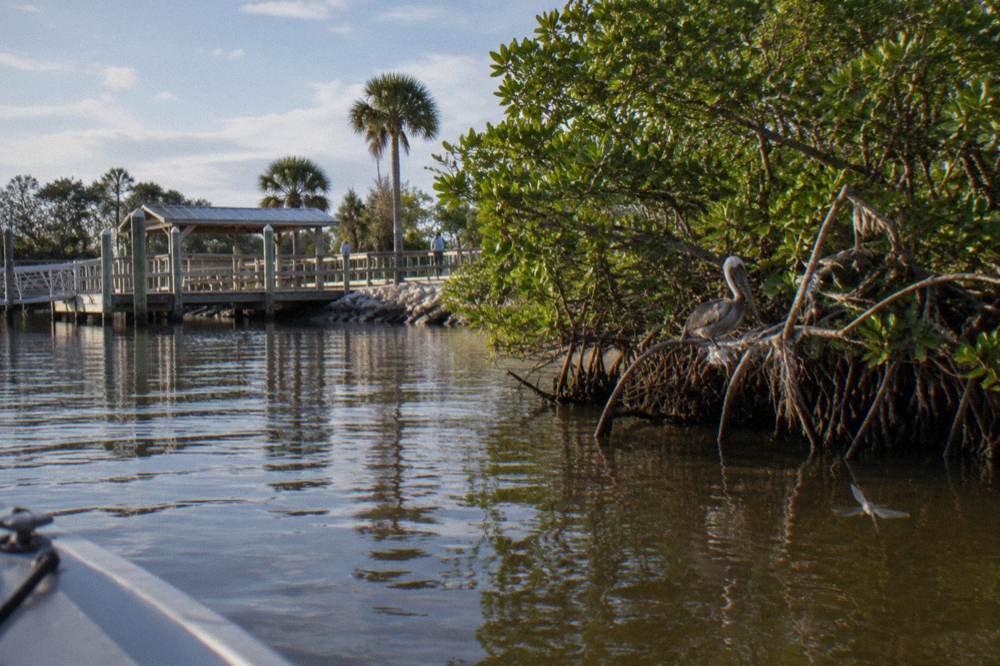
Beyond sponges, Tarpon Springs is famous for its water: the Anclote River, the Gulf islands three miles offshore, and the dolphins that boat operators report on the large majority of cruises. Anclote Key Preserve State Park spans 11,773 acres across four islands with an 1887 lighthouse, reachable only by boat, and dolphins are frequently reported near the river mouth and the island sandbars.
The town's geography is the quiet half of its fame. The Anclote River is short and slow, and it funnels every boat leaving the docks past the sponge warehouses and out into open water within minutes. Three miles offshore sits Anclote Key, a state preserve of four barrier islands that the official park page describes as home to at least 43 bird species, including bald eagles, piping plovers and American oystercatchers. There is no bridge and no causeway; private boats and the ferry operators are the only access. One standing notice matters to anyone planning the trip: the park's dock, boardwalk and lighthouse have been closed for storm recovery since October 2024, so the 1887 lighthouse is seen from the water, and no trip should promise a landing or a climb.
The shelling adventure cruise from Odyssey Cruises runs a two-hour narrated trip from $27.99 per person out to the Anclote Key area with time ashore for shells and the beach, and a separate two-hour sunset cruise from the same dock follows the river into the Gulf as the light goes. Both are operator-direct. On the kayak side, the clear-bottom tandem tour of the Sponge Docks and mangroves, from $69 per person and rated 5.0 from 106 reviews, paddles the same river at water level, which is the closest a traveler gets to the manatees and rays that appear in the shallows.
Dolphins deserve their own sentence in any answer to what the town is famous for, because the boat rides that find them have become a signature in their own right. Operators report bottlenose dolphins on most cruises, especially in calm conditions and near the Anclote Key sandbars at low tide where baitfish gather. Sightings are never guaranteed anywhere, and federal law protects the animals: no touching, feeding or pursuing, which every licensed operator observes. Check availability on the evening dolphin cruise if you want the highest-odds, lowest-effort version of the experience, since its two-hour route covers the river, the mouth and the nearshore Gulf.
Beyond Sponges: What Else Draws Visitors
Tarpon Springs is also known for its festivals, its waterfront parks and its role as a day trip from Tampa and Clearwater. Fred Howard Park offers a one-mile causeway and beach with daily parking at $6, Spring Bayou sits beside free city parks, and recurring events like the seafood festival and the craft festival fill Dodecanese Boulevard several weekends a year.
The festival calendar is fuller than most towns this size. The Sponge Docks Craft Festival returns each fall, free and family-friendly along Dodecanese, and the seafood festival in November is the biggest of the year, filling the street with vendors and music across a full weekend. Taste of Tarpon brings local restaurants together in October. On ordinary Sundays, a free salsa night with DJs runs weekly at a taphouse near the docks, one of those details that surprises visitors expecting only sponge shops. The things to do guide rounds up the full slate for anyone building an itinerary.
The parks round out the picture. Fred Howard Park, on the town's western edge, covers 155 acres with a causeway out to a Gulf beach and opens daily from 7 a.m. to sunset. Spring Bayou, the Epiphany site, is a quiet inlet the rest of the year with herons, turtles and the occasional manatee in winter. The county's parks information page tracks current conditions and any alerts. What the town is famous for, ultimately, is a working relationship with the water, sponges pulled from the Gulf, a cross cast into a bayou, and boats leaving the docks all day to show visitors the rest.
| What it is famous for | Where to see it | What it costs |
|---|---|---|
| Natural sponge industry | Sponge shops and the exhibition cruise on Dodecanese Blvd | Exhibition cruise from $21 per person |
| Greek heritage | Restaurants, bakeries and St. Nicholas Cathedral | Free to walk; food and pastries extra |
| Epiphany cross dive | Spring Bayou, January 6 | Free to watch |
| The Sponge Docks | Dodecanese Boulevard riverfront | Free to walk |
| Dolphins and island trips | Boat cruises from the docks | Evening cruise from $29 per person |
| Anclote Key lighthouse | Seen from the water on island cruises | Shelling cruise from $27.99 per person |
The pattern in that table is deliberate: almost everything famous here can be seen from the waterfront, and the two cheapest paid experiences, the sponge exhibition and the evening cruise, together cost less than a typical theme-park parking fee. That value is part of why the town keeps drawing Tampa Bay locals back on weekends.
Common Questions About Tarpon Springs
what is tarpon springs famous for?
Tarpon Springs is famous for its natural sponge industry, the Greek heritage that grew around it, and the Sponge Docks where both remain visible today. It is also known for the Epiphany cross dive at Spring Bayou every January 6, one of the largest such celebrations in the western hemisphere.
Do they still dive for sponges in Tarpon Springs?
Yes. Commercial sponge diving remains active, using traditional methods to harvest Gulf sponges. The St. Nicholas Boat Line runs a narrated river cruise with a live sponge diver demonstration in a vintage diving suit on select departures, from $21 per person, with tickets sold walk-up at the dock.
Is the Sponge Docks worth visiting?
For most travelers, yes. The docks are free to walk, packed with Greek bakeries and restaurants, lined with sponge shops, and serve as the departure point for every dolphin, sunset and island cruise in town. Expect crowds on weekends and during festivals.
What is the Epiphany cross dive?
It is an Orthodox tradition held every January 6. After services at St. Nicholas Cathedral, the Archbishop blesses the waters of Spring Bayou, a white dove is released, a cross is thrown into the water, and young men of the parish dive to retrieve it. The retriever is considered blessed for the year.
Can you see dolphins in Tarpon Springs?
Dolphins are frequently reported on boat cruises from the Sponge Docks, especially in calm conditions near the Anclote River mouth and the sandbars around Anclote Key. Sightings are wild animal encounters and are never guaranteed, but the evening dolphin cruise reports them on most trips.
Can you visit the Anclote Key lighthouse?
Not on foot. The park's dock, boardwalk and lighthouse have been closed for storm recovery since October 2024, and the island is reachable only by boat. Cruises pass the 1887 lighthouse, so it is seen from the water rather than toured.