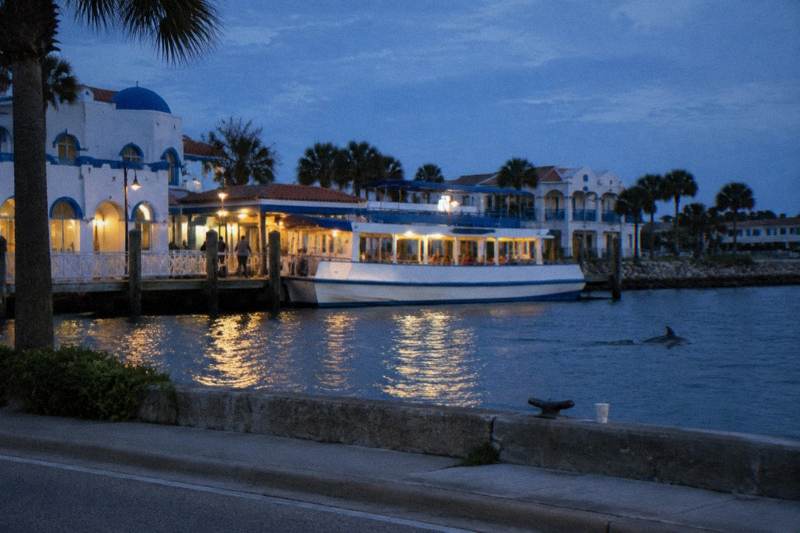
Do You Get Wet On A Dolphin Cruise?
Practical advice on spray, splash and sea state on a Tarpon Springs dolphin cruise: what to wear, what to bring, and how wet you will actually get.
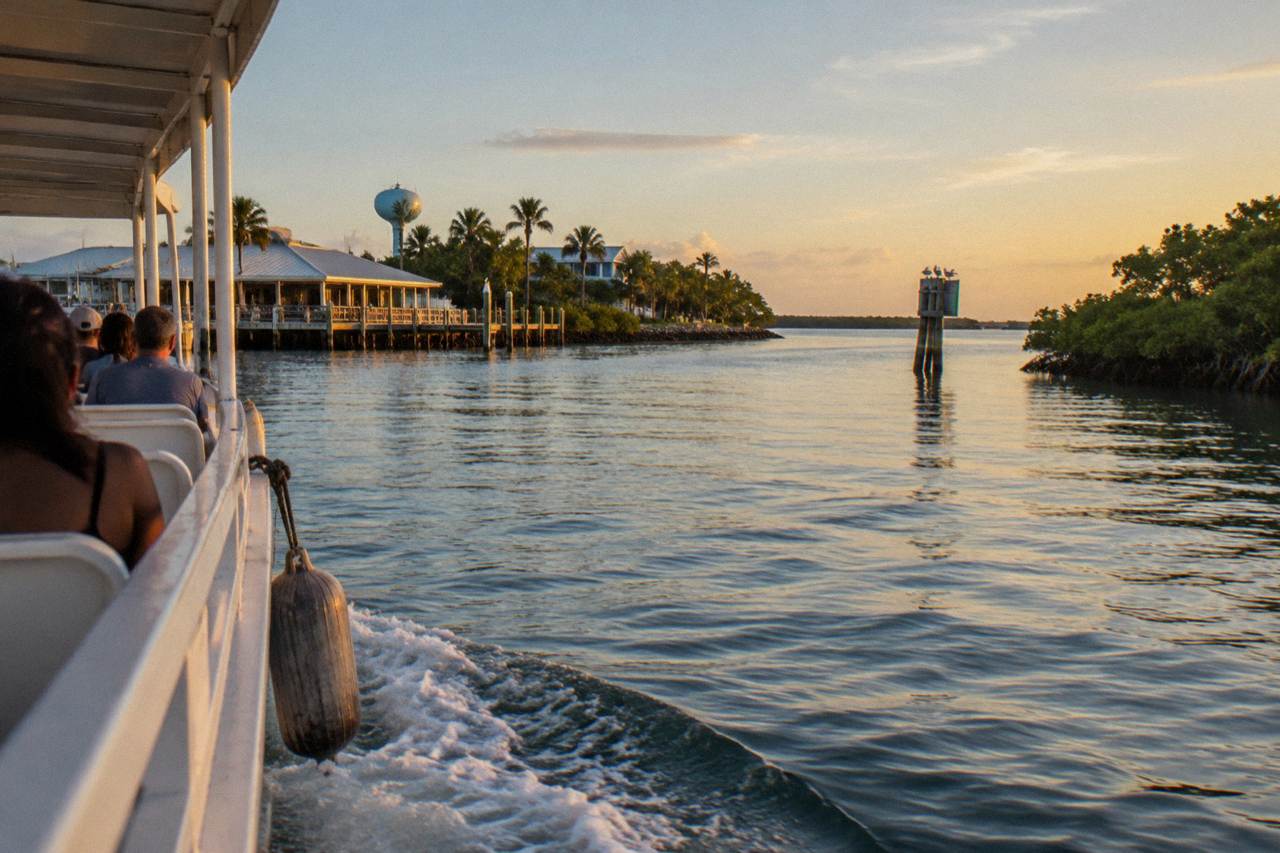
Most people picture two very different things when they book a dolphin cruise. One is a serene sunset glide across calm water. The other is a soaking. The honest answer for Tarpon Springs sits much closer to the first: on a typical evening, you might catch a light mist on the wind, a few drops of spray if the boat turns, or nothing at all beyond damp shoes from a wet deck. The wild card is the wind, and this page breaks down exactly when spray becomes a factor, what to wear, what to pack and how the two main cruise operators out of the Sponge Docks handle it. Staying dry is one thing, but if you're still weighing whether the ticket price makes sense, our skeptic's take on whether a Tarpon Springs dolphin cruise is worth it compares the costs against the free options.
Do You Get Wet On A Dolphin Cruise?
Most passengers stay dry, but a light splash is possible. This 2-hour narrated dolphin cruise from the Tarpon Springs Sponge Docks usually keeps guests dry on a calm evening, though occasional wind-blown spray happens, and when the boat speeds down the Anclote River toward the Gulf or winds kick up a chop, riders near the rails and bow can take splashes, so quick-dry clothes are the safe call.
That is the short version. The longer version depends on three things you can control, where you sit, what you wear, and what you bring, and one thing you cannot, the sea state on the day. The two principal dolphin cruises from the Sponge Docks, the evening cruise run by Spongeorama Cruise Lines and the dolphin and shelling adventure run by Odyssey Cruises, both keep to sheltered water for part of their routes before reaching the open Gulf near Anclote Key, three miles off the coast. Sheltered river water rarely throws spray. Open Gulf water can.
The featured evening cruise, a 2-hour trip from the Spongeorama dock at 512 Dodecanese Boulevard, carries a 4.7 rating from 132 reviews and starts from $29 per person, with refreshments sold on board. The fact that the operator sells and serves food and drink on these trips tells you something about expected conditions: this is not a ride designed to drench anyone. The shelling adventure from Odyssey Cruises, also 2 hours and from $27.99 per person, adds a beach stop on Anclote Key, and that is the one part of any Tarpon Springs dolphin cruise where getting wet is basically guaranteed, because the boat anchors off the island and you step off onto the sand.
If you are still choosing between the evening cruise, the sunset cruise and the island shelling trip, this trio covers the spread:
Whichever you pick, the same packing logic applies. It is worth separating "wet" into three categories, because they call for three different responses. Mist and wind-blown spray are cosmetic and dry in minutes. Direct splashes over the rail or at the bow soak a sleeve or a pant leg and take an hour to dry. Full immersion only enters the picture if you deliberately join a trip with a beach landing. Plan for the first two and you have covered the typical dolphin cruise evening in Tarpon Springs.
Spray, Splash And Seat Choice: Where The Water Lands
Seat choice matters more than weather. On the bow and along the outside rails, spray from the bow wake and side chop reaches you first; in covered, center and stern seating, you stay dry on almost every run. If the crew is moving people or closing a forward section on a breezy evening, that is your signal that the front of the boat is catching water, so sit mid-ship and aft.
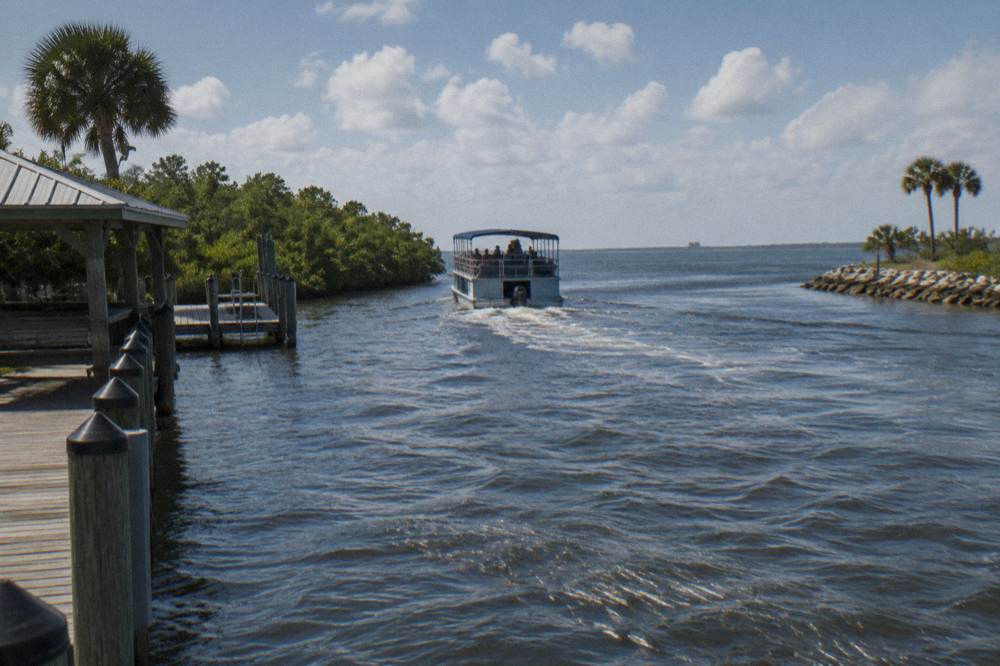
Boats leaving the Sponge Docks travel down the Anclote River first, a no-wake, sheltered stretch where spray is essentially zero. The river section is where the narration lives: the sponge history of the docks, the waterfront homes, the birdlife along the banks. Once the boat clears the river mouth and turns toward Anclote Key, the hull meets Gulf chop, and that is when the geometry of the boat starts to matter. A flat-bottomed or shallow-draft tour boat, the kind most dock operators run because they suit the shallow bars around Anclote, tends to slap and throw a fan of spray at the bow when it pushes through a chop at speed.
A practical pattern regulars use: ride outside on the way out while the boat is in the river and the light is good for photos, then move to covered or aft seating for the faster open-water legs and the return. Crews on these trips generally do not mind passengers changing seats once underway; ask rather than assume, since some seats double as crew working space near the stern and the boarding gate. And keep both hands on phones and hats in the open sections, less because of spray than because wind alone will take a ball cap off a head on a moving boat.
There is one honest exception to everything above, and it deserves its own sentence rather than a footnote. Dolphins themselves, when they ride the bow wave, do not soak passengers; they stay in the water and you stay above it. If a pod joins the boat, the risk to your clothes is still the sea, not the animals. Wildlife sightings are never guaranteed on any trip, and operators are careful to say so, but dolphins are frequently reported on cruises from these docks, particularly in calm conditions near the Anclote Key sandbars. If one boats alongside your rail, the only thing you will reach for is your camera.
What To Wear On A Dolphin Cruise
Dress for wind first, water second. Quick-dry fabrics, a light windbreaker or cover-up, and sandals or shoes you do not mind getting splashed will cover every realistic scenario on a Tarpon Springs dolphin cruise. Skip long cotton, heavy denim and anything that is miserable damp, because evening air over the Gulf stays cooler than the dock, and a wet cotton layer turns a nice trip into a shivery one.
The evening timing of the featured cruise matters here. Florida afternoons are hot, but the sun drops fast in the last hour of a 2-hour evening trip, and the apparent temperature on a moving boat is several degrees below the dock reading, all of it wind-driven. A light layer that blocks wind solves both the chill and the spray question in one garment. Locals who ride these boats regularly tend toward the same kit regardless of season: shorts or quick-dry pants, a t-shirt, a windbreaker tied around the waist, and either sandals with a heel strap or sneakers they accept might get spotted with salt.
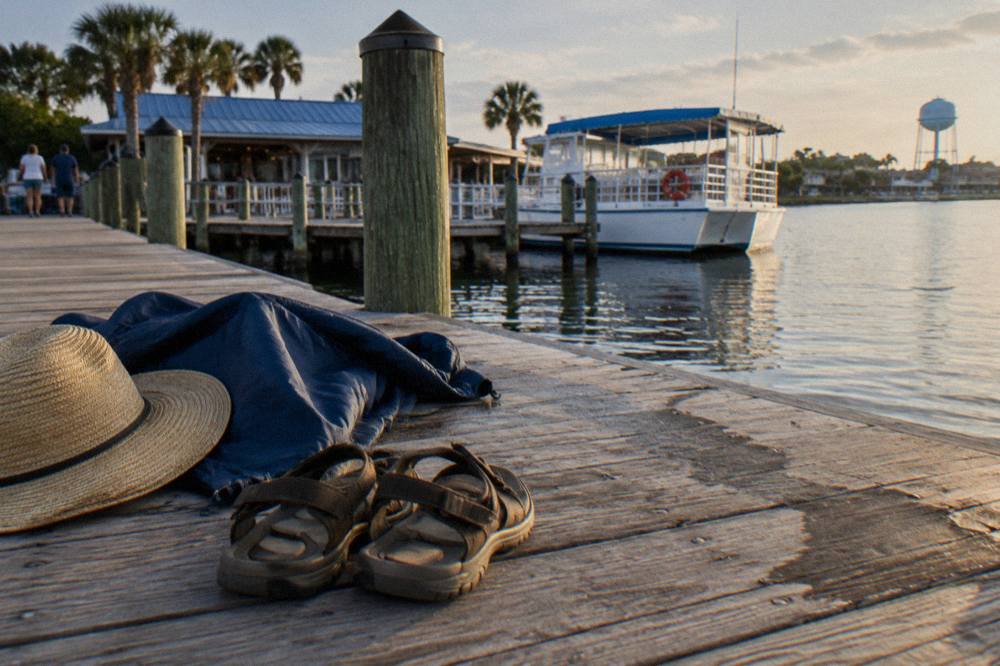
Here is how the wardrobe math works out in practice:
| Item | Why it earns its place | Skip if |
|---|---|---|
| Light windbreaker or cover-up | Blocks wind and mist; doubles as warmth after sunset | It is a stiff raincoat that traps heat |
| Quick-dry shorts or pants | Damp from spray dries within the trip | Heavy denim, which stays wet and cold |
| Sandals with heel strap or older sneakers | Decks are wet somewhere on almost every boat | Leather soles or anything slippery |
| Hat with a cinch or clip | Sun on the outbound leg, wind on the return | A loose ball cap in open sections |
| Sunglasses with a strap | Low sun on the river, glare on the Gulf | Glass lenses on an active bow section |
One note on the shelling trip specifically. The Odyssey dolphin and shelling adventure lands you on the beach at Anclote Key, so footwear you can walk on sand and wade a shallow edge in is not optional there. Flip-flops fail on wet sand and ladders; water shoes, strap sandals or bare feet all work better. The same trip's beach stop is the only part of a Tarpon Springs dolphin cruise where you should plan on wet feet by design, so keep the beach towel in the bag for that one and not for the evening cruise.
Color and fabric advice usually ends up in guides like this, so here it is plainly: nothing you wear on these boats needs to be special technical gear. The listings describe casual, family-oriented sightseeing trips, not expedition runs. A dolphin cruise is one of the few wildlife experiences where the dress code is genuinely "what you wore to the Sponge Docks," plus a layer. The people who look most comfortable are almost always the ones carrying one extra layer they never needed.
What To Bring (And What To Leave In The Car)
Bring sunscreen, sunglasses, a hat, a phone or camera, a small towel and a refillable water bottle; on the shelling trip add a bag for shells and water shoes. Leave umbrellas, glass bottles, large coolers and anything that cannot survive a splash in the car. Cash for dockside snacks is optional since the evening cruise sells refreshments on board, though they are not included in the fare.
The small towel is the item people skip and then wish they had. It costs nothing to carry, it dries a seat after a spray event, it wipes salt mist off a camera lens, and it earns its place on the shelling trip twice over. A resealable plastic bag or dry pouch for your phone is the second quiet hero: it does not need to be a rugged waterproof case, just a zip bag that keeps wind-blown mist and a stray splash off the screen while you photograph the shoreline. Cheap insurance for a device that does not respond well to salt water.
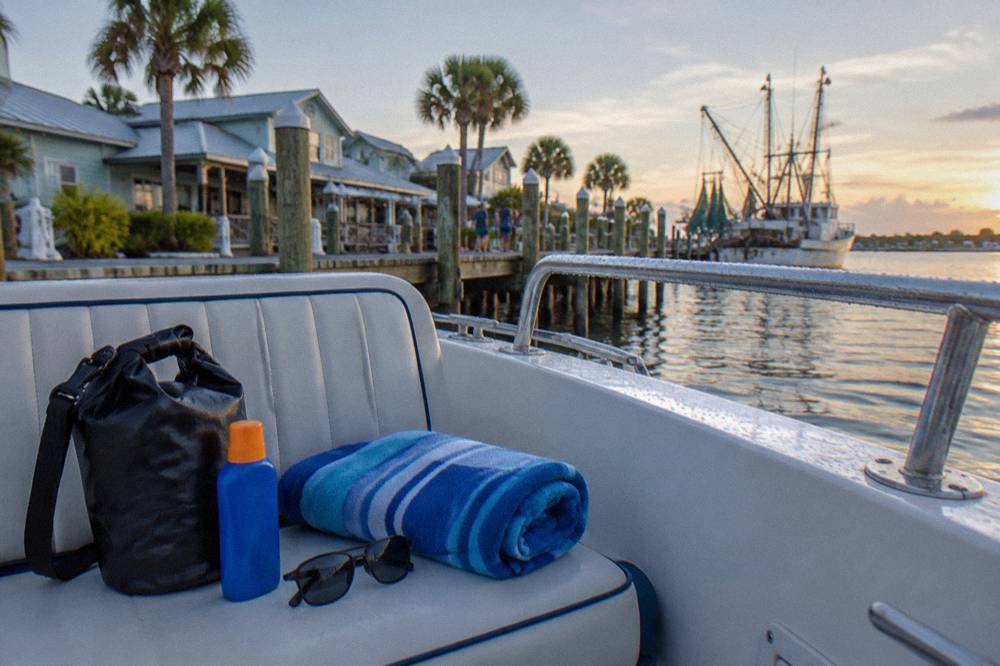
| Bring | Reason | Notes |
|---|---|---|
| Sunscreen, applied before boarding | Water reflects sun from every angle | Reef-safe brands are easy to find at dock shops |
| Zip bag or dry pouch | Mist and splash protection for a phone | A sandwich bag is genuinely enough |
| Small towel | Seat, lens and hands | One per two people is fine |
| Water bottle | 2 hours in open air dehydrates you | Refill at the dock before boarding |
| Bag for shells | Only matters on the island trip | Shelling is the point of that run |
Refreshments are sold onboard the evening cruise, so you can skip packing drinks, though they are not part of the $29 fare. That removes the temptation to carry a drink onto a moving boat with both hands busy, which is how phones end up in the Anclote River. The operator-direct cruises from Odyssey, the sunset cruise and the shelling adventure, both from $27.99, are sold through the operator's own listing rather than a booking page, so check the live listing for what is served and what you may carry aboard; the operator sets those rules, not this site. As a general habit, anything with glass stays ashore on any tour boat, and crew everywhere will say so.
For a fuller sense of the whole category, the dolphin cruise guide for Tarpon Springs compares every trip on the water here, and the question of what time of day works best for a dolphin cruise connects directly to the wet question, because evening runs tend to ride the day's calmest wind.
Electronics, Cameras And Phones On The Water
Treat every phone and camera as splash-exposed, even on a calm trip. A zip bag in the pocket, a wrist strap on the camera, and no device held over the rail while the boat is moving covers nearly every loss scenario reported on dolphin cruises. Water damage from spray is rare, drops over the side are the real cause, and both are preventable for under ten dollars.
The pattern in guest reviews is consistent and a little grim: the phones that die on boat trips almost never get wet, they get dropped, usually while a dolphin is breaching and a passenger lunges for a shot with one hand. A wrist strap or a phone lanyard solves this completely. The Anclote River is dark, tannin-stained water, and a phone that goes over the rail between the Sponge Docks and the Gulf is effectively gone, so the five seconds it takes to loop a strap on is the highest-value preparation on this entire page.
Photographically, spray and salt mist are the enemy of image quality rather than the device itself. A microfiber cloth, the kind sold for eyeglasses, wipes salt film off a lens in a second and keeps the whole trip's photos from looking foggy. Keep the cloth in the same pocket as the zip bag and you will use both repeatedly on any breezy run. If you carry a larger camera, a simple rain cover or even a shower cap over the body between shooting bursts is standard practice on small boats in the Gulf.
One habit worth copying from fishermen: never set a phone flat on a seat or the gunwale. Boats heel, accelerate and stop, and a flat phone is one turn away from the deck, which on a working tour boat is wet. Pockets, zipped bags and closed compartments are the only places a device is actually safe while the boat is underway. Crews on the Sponge Docks trips are generally happy to hold nothing, guard nothing and rescue nothing, so the responsibility is yours from boarding to return.
Weather, Wind And When Operators Call It Off
Wind, not rain, decides how wet a dolphin cruise gets, and operators cancel for safety, not spray. Small craft advisories, storms and rough seas in the Gulf end trips; light chop does not, and a drizzle may still run if visibility is fine. The operator makes the call, and the honest answer about any specific day is to check with them before you travel.
The National Weather Service issues small craft advisories for the coastal Gulf waters off Pinellas County when winds and seas make small-boat travel risky, and those advisories appear on the NWS marine forecast for the Tarpon Springs coastal waters. When one is active, dolphin cruises to the Gulf typically do not sail. Operators monitor the forecast and the actual conditions, and their cancellation policies favor rescheduling over refunds-by-argument; the evening cruise listing carries a free cancellation window, so a weather-driven change of plan does not cost you the fare. If you want a deeper treatment of the whole subject, the guide to Tarpon Springs weather and boat tour cancellations covers the seasonal patterns.
Two Gulf-specific factors are worth knowing as background rather than alarms. Hurricane season runs June 1 to November 30, per the National Hurricane Center's climatology, and within that window individual systems, not the calendar, are what actually cancel trips. Red tide, the algae bloom tracked by the Florida Fish and Wildlife Conservation Commission, is reported on the FWC's statewide status page, and conditions shift week to week, so a current-status claim belongs to the operator and the state agencies, not to a travel article. Neither factor changes what you wear; both occasionally change whether you sail.
Wind direction has a practical wrinkle worth knowing. A breeze from the east pushes spray away from a boat heading west down the river, while a southwest wind puts it right in the faces of the forward seats on the Gulf leg. You cannot order the wind, but you can read it at the dock in about ten seconds: if the flags along Dodecanese Boulevard are snapping, expect spray forward and sit accordingly. If they hang soft, the whole wet-clothes question mostly evaporates, and the answer to this article's question becomes "barely at all."
The sunset cruise option is worth flagging here because timing changes exposure. Evening wind typically eases as the land and sea equalize in temperature near dusk, one reason sunset runs are often the smoothest of the day, and the Odyssey sunset cruise, 2 hours from $27.99 with narration down the Anclote River into the Gulf, is the format most tuned to that calm window.
For anyone who wants the dolphins and the beach in one trip, the shelling adventure flips the calculus: you will get wet to the ankles or knees by choice at the island stop, and every other part of the trip behaves like the evening cruise. Check the live listing for departure times before you plan the day around it.
A Realistic Wetness Scale For Every Part Of The Trip
Rate each leg of a Tarpon Springs dolphin cruise by its realistic wetness: river legs are dry, open-Gulf legs are damp with spray near the rails, and the shelling stop is wet by design. Nothing on any of these trips soaks you the way a water park ride does, and the only guaranteed wet feet in the whole category belong to the island landing.
Put together, the picture looks like this:
| Part of the trip | Realistic wetness | Driver |
|---|---|---|
| Boarding at the Sponge Docks | Dry | Dock boarding, no wading |
| Anclote River leg | Dry | Sheltered, no-wake water |
| Open Gulf leg to Anclote Key | Damp, spray near bow and rails | Chop and boat speed |
| Dolphin viewing, drifting | Dry | Boat holds position |
| Island beach stop (shelling trip only) | Wet feet and possibly legs, by choice | Anchored off the beach, you wade ashore |
| Return leg at dusk | Damp to dry | Wind eases near sunset |
The takeaway from the table is that the question in the title has a different answer per row, and almost every row is kind. Dress for the two damp rows, bring the towel for the one wet row if your trip includes it, and the rest of the evening takes care of itself. Families with small children can treat the evening cruise as a dry activity with a splash exception; the children who end up soaked on dolphin cruises are almost always the ones who leaned over the rail at speed, which is a supervision question, not a gear question. A change of clothes for kids in the car, not on the boat, is the proportionate response.
That proportion is the closing thought. A dolphin cruise out of Tarpon Springs is a gentle product: 2 hours, narrated, refreshments on board on the featured trip, priced from $29 per person with a 4.7 rating across 132 reviews. The water is the medium, not the attraction. Prepare for mist and the odd splash, keep the phone on a strap, and the worst realistic outcome of the evening is salt-stiff hair and a story about the wind. If you are weighing the whole category rather than one evening, this site's Tarpon Springs Boat Tours comparison gathers every cruise, kayak trip and charter on these docks in one place.
Common Questions About Getting Wet On A Dolphin Cruise
do you get wet on a dolphin cruise?
Usually only slightly. On a Tarpon Springs dolphin cruise you may catch wind-blown mist or a splash near the rails on the open-Gulf legs, but covered and aft seating stays dry on almost every run. The one guaranteed-wet part of the category is the beach stop on the island shelling trip, where you wade ashore by choice.
Do I need a poncho or rain jacket?
A light windbreaker is a better choice than a poncho. Ponchos catch wind on a moving boat, and the dampness you are guarding against is mist and spray, not rain. A windbreaker blocks both and keeps you warm after sunset, which matters on the 2-hour evening format.
Will my phone get wet?
It can, from spray or mist, but drops are the bigger risk. Keep the phone in a zip bag in your pocket when not shooting, and use a wrist strap while photographing. Never set a phone flat on a seat or the gunwale while the boat is underway.
Do dolphins splash water onto the boat?
No. Dolphins stay in the water and passengers stay above it, and a pod riding the bow wave does not throw water into the boat. Sightings are never guaranteed on any trip, but dolphins are frequently reported on cruises from the Sponge Docks.
What shoes should I wear?
Sandals with a heel strap, water shoes or sneakers you do not mind getting spotted with salt work for every trip. On the island shelling adventure, water shoes or strap sandals are the practical choice because you wade from the boat to the beach.
Do cruises get cancelled for spray or rain?
Operators cancel for safety, mainly small craft advisories, storms and rough seas, not for spray. Light chop and drizzle usually still run. The operator makes the call each day, and the evening cruise listing carries a free cancellation window, so a weather change of plan does not cost the fare.