Tarpon Springs Weather And Boat Tour Cancellations
Tarpon Springs sits on the Anclote River where it opens into the Gulf, and that position shapes every boat trip on the calendar: humid summers with afternoon storms, a June to November hurricane season, occasional small craft advisories, and warm Gulf water that stays swimmable well into autumn.
Short answer
Hurricane season runs June 1 to November 30, but most Tarpon Springs boat tours run all year. The wet season, June to September, brings afternoon thunderstorms rather than all-day rain, and Gulf water stays warm from May through October. Small craft advisories occasionally cancel Gulf trips, and operators decide trip by trip.
Boat trips in Tarpon Springs leave from a river that widens into the Gulf, which means the weather that matters is not one forecast but two: the river conditions on the Anclote and the open water beyond Anclote Key. A calm evening on the river can coincide with choppy Gulf water, and a sunny September morning can still fall inside hurricane season. This guide lays out what the climate record actually shows, which conditions cancel which kinds of trips, and what happens to your money when an operator calls a trip off.
The short version: Tarpon Springs is a year-round boat tour town. The wet season brings predictable afternoon storms rather than ruined days, hurricane season is a monitoring exercise rather than a shutdown, and most tours listed here carry free cancellation. Here's what Tarpon Springs weather typically does through the year, and how tour operators handle cancellations when conditions turn.
What Is The Weather Like In Tarpon Springs Through The Year
Tarpon Springs runs warm: average daily highs climb from 69.3 degrees in January to 90.8 in August, while lows sit between 50.7 and 75.7 degrees, and rainfall swings from a dry 1.90 inches in November to 9.66 inches in August. The wet season, June through September, delivers 7.0 to 9.7 inches a month, almost all of it in short, heavy afternoon bursts. The dry season, roughly November through April, is the region's most reliable stretch of clear skies and low humidity.
Those numbers come from the 1991 to 2020 climate normals recorded at the Tarpon Springs station kept by NOAA's National Centers for Environmental Information. They are averages, not promises: a given February day can hit 80 degrees, and a July morning can be cloudless until three in the afternoon. What the normals do establish is the rhythm. Winter is the stable season, summer is the storm season, and the shoulder months of May and October sit pleasantly between them.
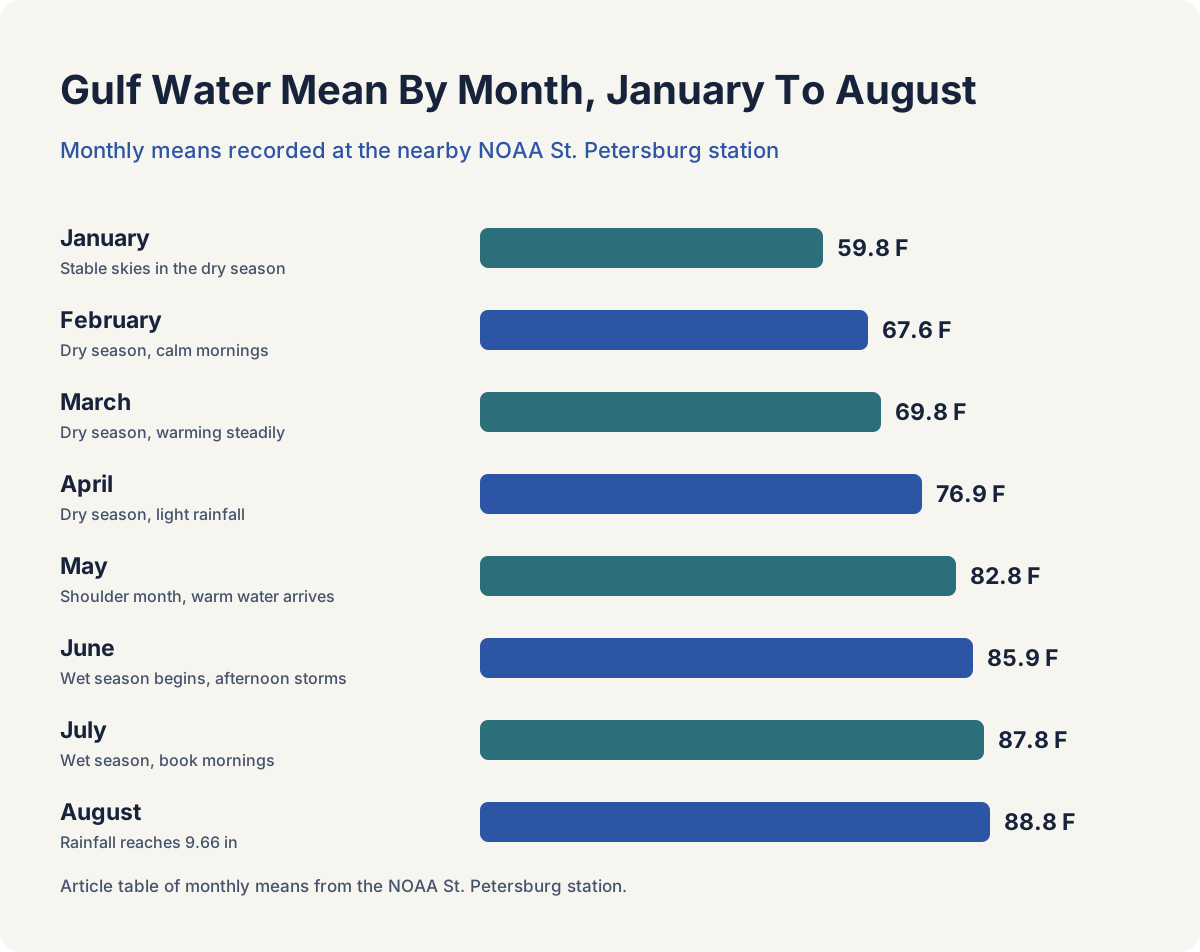
Gulf water temperature matters as much as air temperature for boat trips, because it drives both comfort and wildlife. Monthly means at the nearby NOAA St. Petersburg station show water warming from 59.8 degrees in January to 88.8 in August, then cooling slowly through autumn: 85.2 in September, 80.3 in October, 71.5 in November. October water still averages 80.3°F, a bit cooler than May's 82.8°F, so autumn trips still feel summery.
| Month | Gulf Water Mean | Season Note |
|---|---|---|
| January | 59.8 F | Coolest water of the year, stable skies |
| February | 67.6 F | Dry season, calm mornings |
| March | 69.8 F | Dry season, warming steadily |
| April | 76.9 F | Dry season, light rainfall |
| May | 82.8 F | Shoulder month, warm water arrives |
| June | 85.9 F | Wet season begins, afternoon storms |
| July | 87.8 F | Wet season, book mornings |
| August | 88.8 F | Warmest water, heaviest rainfall at 9.66 in |
| September | 85.2 F | Wet season, hurricane season peak |
| October | 80.3 F | Wet season ends, quiet standout month |
| November | 71.5 F | Driest month at 1.90 in of rain |
| December | 68.7 F | Dry season, cool mornings |
If you are choosing between seasons rather than specific dates, our best time for a boat tour guide works through the same question with the wildlife calendar folded in.
When Is Hurricane Season In Tarpon Springs
Hurricane season in the Atlantic basin, which includes the Tarpon Springs coast, runs June 1 to November 30 every year, as defined by the National Hurricane Center, and that window is a monitoring exercise rather than a reason to stay away. Most seasons produce no direct impact on the Tampa Bay area at all, and a hurricane landfall near Tarpon Springs is a rare event in any given year. Summer and early fall remain busy, fully operational months for boat tours on the Sponge Docks, and visitors take dolphin cruises and kayak paddles inside the official season without ever noticing it.
The National Hurricane Center publishes the season dates and climatological background at nhc.noaa.gov/climo, and that page is the reference to watch if a system forms during your travel window. When a named storm approaches, decisions cascade quickly: operators stop running trips, state parks including Anclote Key may close access, and local officials in Pinellas County issue evacuation guidance for barrier and low-lying areas. A storm's wind field, not its category label, determines the local effect, so a weakening tropical storm can still cancel a week of charters.
What hurricane season does not mean is an empty calendar. The typical pattern is long stretches of fine weather interrupted occasionally by a disturbed few days. The practical approach for a June or September visitor is to book the trip you want, keep an eye on the forecast from the National Weather Service's Tampa Bay office, and know the cancellation terms before you pay. If a storm watch is posted for your dates, that is the moment to call the operator or check your booking page, not the morning of the trip.
For trips that need flat water rather than just dry skies, the difference between a river route and a Gulf route matters more than the season. The boat tours compared guide sorts the local roster by where it actually goes.
What Weather Actually Cancels A Boat Tour
Only three weather conditions actually cancel boat tours in Tarpon Springs: small craft advisories on the Gulf, lightning within striking distance of the route, and the approach of a named storm. Rain alone, on the other hand, almost never cancels a trip. The river-based trips, which include the sponge diving exhibition cruise and the kayak paddles, keep running in conditions that would ground a Gulf charter, because they never leave the sheltered Anclote River. Wind is the real gatekeeper, since it generates the chop that makes a trip unpleasant or unsafe rather than merely wet, and operators judge it trip by trip on the morning of departure. A little wind rarely spoils the wildlife, so if you're hoping to spot dolphins and manatees on the same outing, the guide to Tarpon Springs tours for both animals explains which trip fits which sighting.
A small craft advisory is the National Weather Service's flag that winds or seas are hazardous for smaller vessels, typically sustained winds around 20 knots or higher and rough seas. One was posted for the local coastal waters in late September 2026 for 20 to 25 knot winds, which is a normal, occasional event rather than an emergency. Under an advisory, dolphin cruises and island trips that cross open Gulf water usually hold, reschedule, or refund, while trips that stay inside the Anclote River often run as planned. Operators make that call when the actual conditions are known.
Lightning is handled with the same trip-by-trip judgment. Florida's summer thunderstorms are brief but serious, and a kayak tour with a 2 p.m. start in July will sometimes delay by an hour rather than cancel outright. If you are booking a wet-season paddle such as the clear kayak eco tour with manatee viewing, a morning departure slot gives you the day's most stable air and a fallback window if storms build early. Check availability on the listing for the earliest time that fits your schedule.
| Condition | River And Kayak Trips | Gulf Trips And Island Landings |
|---|---|---|
| Light rain | Usually run | Usually run |
| Heavy rain, no wind | Often run or delay | Often run, visibility permitting |
| Small craft advisory | Frequently run, route shortened | Usually cancelled or rescheduled |
| Lightning nearby | Delayed until cells pass | Delayed or cancelled |
| Named storm watch or warning | Cancelled | Cancelled, sometimes days ahead |
Does The Wet Season Ruin Summer Boat Trips
No: the June to September wet season in Tarpon Springs delivers 7.0 to 9.7 inches of rain a month, but most of it falls in short, intense afternoon and early-evening thunderstorms, leaving mornings largely clear and the daily rhythm intact. The climatological pattern is so regular that locals plan around it, boating in the morning and watching the sky build after lunch. A summer visitor who books a 10 a.m. departure is playing the same odds the locals do, and those odds are good across June, July, August and September alike.
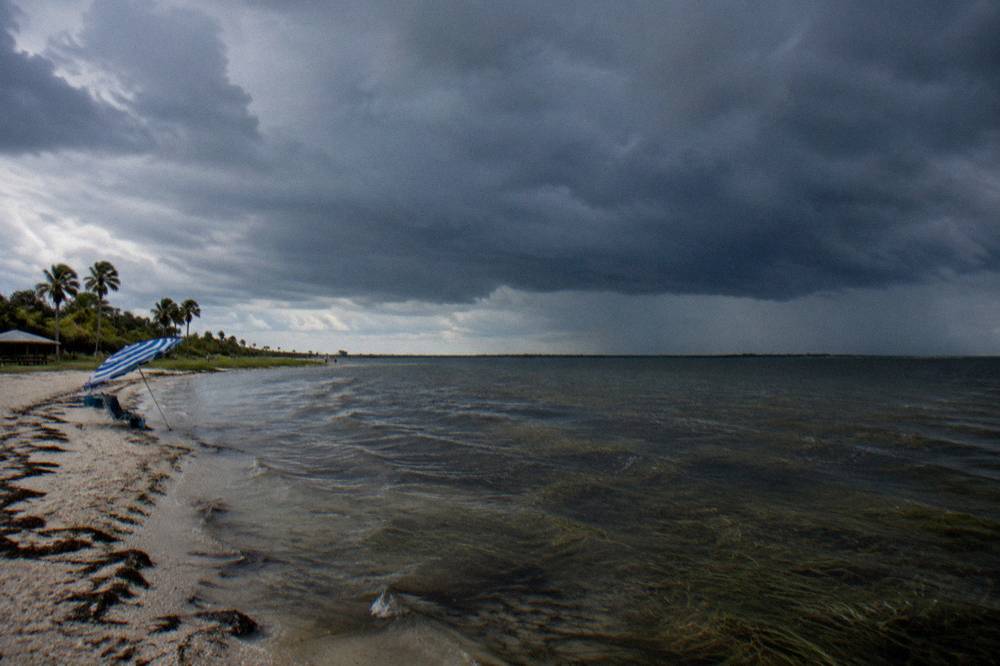
The storms that do form are violent but small and fast-moving. A typical cell passes in 30 to 60 minutes, which is why operators delay rather than cancel when one sits over the route. The risk to a summer trip is not a washed-out day but a wet hour, and on a 90-degree afternoon many passengers consider that a fair trade. What the wet season does change is the light: a departing thunderstorm at sunset can turn an ordinary evening dolphin cruise into the most photographed hour of a vacation, and dolphins are frequently reported on those calm, post-storm evenings when the water goes glassy.
The evening dolphin cruise from the Sponge Docks is a two-hour trip that leans into exactly this window, departing as the afternoon heat breaks. It carries a 4.7 rating from 132 reviews, runs from $29 per person, and books with free cancellation, which is the combination you want in a season where the forecast can shift between booking and boarding. Check availability a few days out, then glance at the sky the afternoon of.
What Is Red Tide And Does It Affect Boat Tours
Red tide is a naturally occurring algae bloom, Karenia brevis, that can kill fish and irritate breathing near affected beaches, and its presence or absence in Pinellas County varies week to week, so no live status belongs in a planning guide. The Florida Fish and Wildlife Conservation Commission samples statewide and posts updated maps, and that page, at FWC statewide red tide page, is the only source worth checking a day or two before a Gulf trip. Recent sampling has shown background concentrations in the region, which is the calm end of the scale.
What red tide does to a boat tour depends entirely on concentration. Background levels have no effect on a trip at all. A moderate or high bloom near the Anclote River mouth can bring dead fish to the beaches and a coughing irritation onshore, and in those conditions operators may reroute trips upriver or cancel Gulf portions. River-based paddles and the sponge diving exhibition are largely insulated, since the bloom lives in salt water fed by offshore currents, not in a narrow river.
The honest framing is this: red tide is a Florida-wide background condition that occasionally spikes, it is not predictable months ahead, and it is announced by FWC rather than by tour operators. If a bloom is active during your dates, the operator will tell you at check-in or before, and the same cancellation logic as any weather hold applies. Build your trip list, then check the FWC map in the final 48 hours alongside the marine forecast, and let those two sources make the call.
How Small Craft Advisories Work On The Anclote River
A small craft advisory warns operators of winds and seas hazardous to small boats, and it applies to the Gulf waters off Tarpon Springs rather than the sheltered Anclote River, so river cruises frequently run on days when island trips stay docked. The advisory is issued by the National Weather Service's marine forecast for the coastal waters, and any operator running past the river mouth checks it before every departure. For a visitor, which trip you booked determines your day more than the advisory itself does.
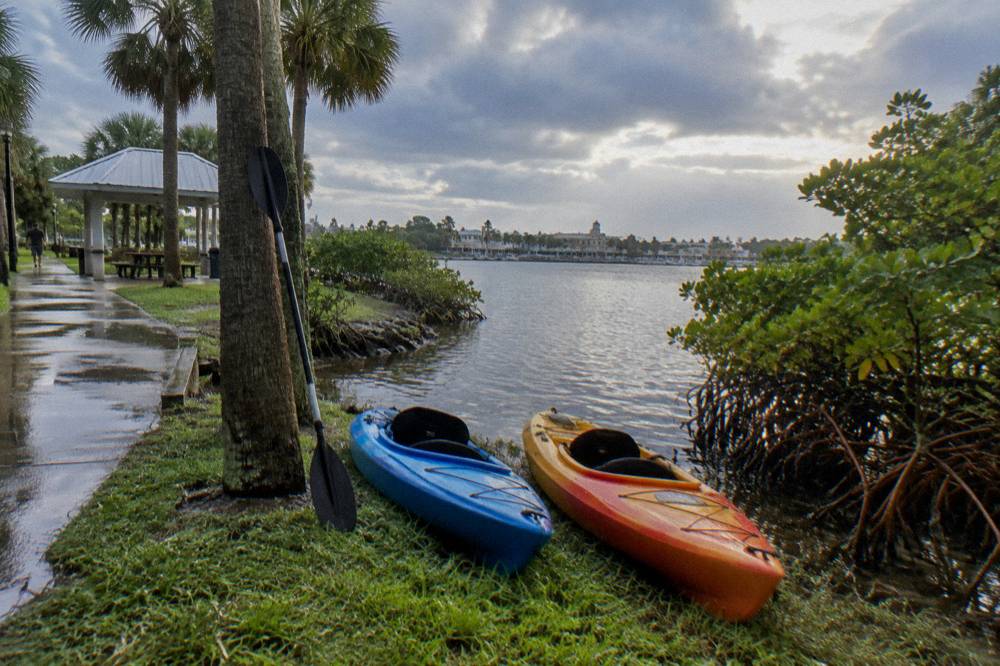
A sunset cruise that turns around inside the river, such as the Odyssey sunset cruise, holds a schedule in conditions that would cancel a shelling trip to Anclote Key, which crosses open water to reach the island. Kayak routes along the mangroves behind the Sponge Docks sit somewhere between, exposed to wind on the open flats but protected in the mangrove channels. When in doubt, the operator's phone number is on every listing, and a call the morning of departure gets a straight answer about whether the trip is running and on what route.
Wind also shapes the wildlife side of a trip, independently of safety. Calm, low-wind days are when operators report the best dolphin viewing near the Anclote Key sandbars, because baitfish concentrate and the surface is readable. That is a reason to prefer a settled forecast even when no advisory is posted, and a reason a slightly bumpy day can run but underdeliver. The wildlife calendar in our dolphin cruise guide covers what else moves sightings besides weather.
What Are The Cancellation Terms On Tarpon Springs Trips
Cancellation terms belong to the operator and the listing, not the weather, so the rule is to read the terms before you pay: trips sold through a booking page generally carry free cancellation up to a stated cutoff, while operator-direct tickets are handled by the operator directly. Weather cancellations initiated by the operator almost always come with a reschedule or a refund, because the trip legally cannot run, but the mechanics differ product to product, and the cutoff clock only matters when you cancel, not when they do.
On this site's roster, the online-bookable tours carry the booking page's standard cancellation policy, and several listings, including the featured evening dolphin cruise and the clear kayak eco-tours, are explicitly flagged free cancellation. The operator-direct products, which are the St. Nicholas sponge diving exhibition cruise and both Odyssey cruises, are bought through the operator's own channels, so a weather call means a phone conversation and a reschedule or refund at the operator's discretion. None of this is a hardship in practice: Tarpon Springs operators have run through decades of Florida summers and handle weather holds routinely.
A private charter is the one category worth extra attention, because a full-day booking such as the Marine Zone full day charter at $950 per group represents a real commitment. Charter captains watch the marine forecast days ahead and will talk through options with you before departure rather than let you drive to a dock that is not sailing. For weather planning on a charter specifically, our fishing charters guide goes deeper.
| Trip Type | How It Sells | Typical Weather Handling |
|---|---|---|
| Dolphin and sunset cruises | Booking page, free cancellation on listed trips | Reschedule or refund if the operator cancels |
| Kayak eco tours | Booking page, free cancellation on listed trips | Delay for lightning, reschedule for storms |
| Sponge diving exhibition cruise | Operator-direct at the dock booth | Reschedule or refund at the operator's counter |
| Island and shelling trips | Operator-direct or booking page | First to hold in rough Gulf conditions |
| Private fishing charters | Booking page | Captain confers days ahead on the forecast |
When Should You Book Around Tarpon Springs Weather
Book the trip you want without waiting on a long-range forecast, choose morning departures in the wet season, and do your real weather check inside 48 hours of departure, when marine forecasts become genuinely trustworthy for a two-hour trip. Long-range forecasts in a subtropical climate are close to useless for a single boat tour, and popular time slots sell out regardless of what the sky might do three weeks out. The booking question and the weather question are separate, and treating them separately gets you both: the slot you want, held early, then a clean go or no-go decision when the forecast firms up.
Inside the final two days, the sequence is simple. Check the National Weather Service marine forecast for the Tarpon Springs coastal waters, glance at the FWC red tide map if your trip crosses open Gulf water, and then look at your booking confirmation for the operator's contact and cancellation cutoff. If the forecast is clean, you do nothing. If an advisory or a storm system appears, you call the operator or open the listing and make one decision: reschedule within your trip, or cancel free before the cutoff and rebook for a better day.
Timing by season is just as easy. The dry season from November through April is the most weather-proof window on the calendar, with rainfall at its lowest and comfortable highs. Summer trips reward early starts and accept the possibility of a wet hour, and the water is at its warmest. October is a quiet standout: air temperatures ease off, Gulf water is still 80.3 degrees on average, and the wet season has already ended.
One planning note that belongs here rather than anywhere else: the St. Nicholas sponge diving exhibition cruise runs a short 45 to 90 minute route inside the river from $21 per person, which makes it the roster's best bad-weather fallback, since river conditions hold even when the Gulf does not. Walk-up tickets are sold at the dock booth, and the live sponge diver demonstration happens on select departures, so call ahead to confirm a diver is scheduled if that is the part you came for. More context on that tradition sits in our sponge diving boats guide.
The site that published this guide, Tarpon Springs Boat Tours, keeps the full roster with prices and meeting points, which is the fastest way to line up a backup trip before you need one.
Common Questions About Tarpon Springs Weather And Boat Tour Cancellations
What is hurricane season in Tarpon Springs?
Hurricane season runs June 1 to November 30 across the Atlantic basin, including the Tarpon Springs coast. Most of that window passes without any local impact, but a named storm approaching the Tampa Bay area will cancel boat trips, sometimes several days ahead.
Do boat tours get cancelled for rain?
Almost never for rain alone. Light rain is normal on summer trips, and heavy rain typically causes a delay rather than a cancellation. The conditions that actually cancel trips are small craft advisories on the Gulf, nearby lightning, and approaching named storms.
What is a small craft advisory and does it cancel dolphin cruises?
It is a National Weather Service warning of winds and seas hazardous to small boats, posted for the coastal waters. Gulf-crossing dolphin cruises and island trips usually reschedule or refund under one, while river-based cruises often still run on a shortened route.
Do I get a refund if the operator cancels for weather?
When the operator cancels, you are offered a reschedule or a refund, and trips booked with free cancellation can also be cancelled by you before the stated cutoff. Operator-direct tickets, such as the sponge diving exhibition cruise, are handled directly with the operator at the dock.
When is the wet season in Tarpon Springs?
June through September, with 7.0 to 9.7 inches of rain a month, mostly in short afternoon and early-evening thunderstorms. Mornings stay largely clear, so early departures are the standard strategy for summer boat trips and kayak paddles.